
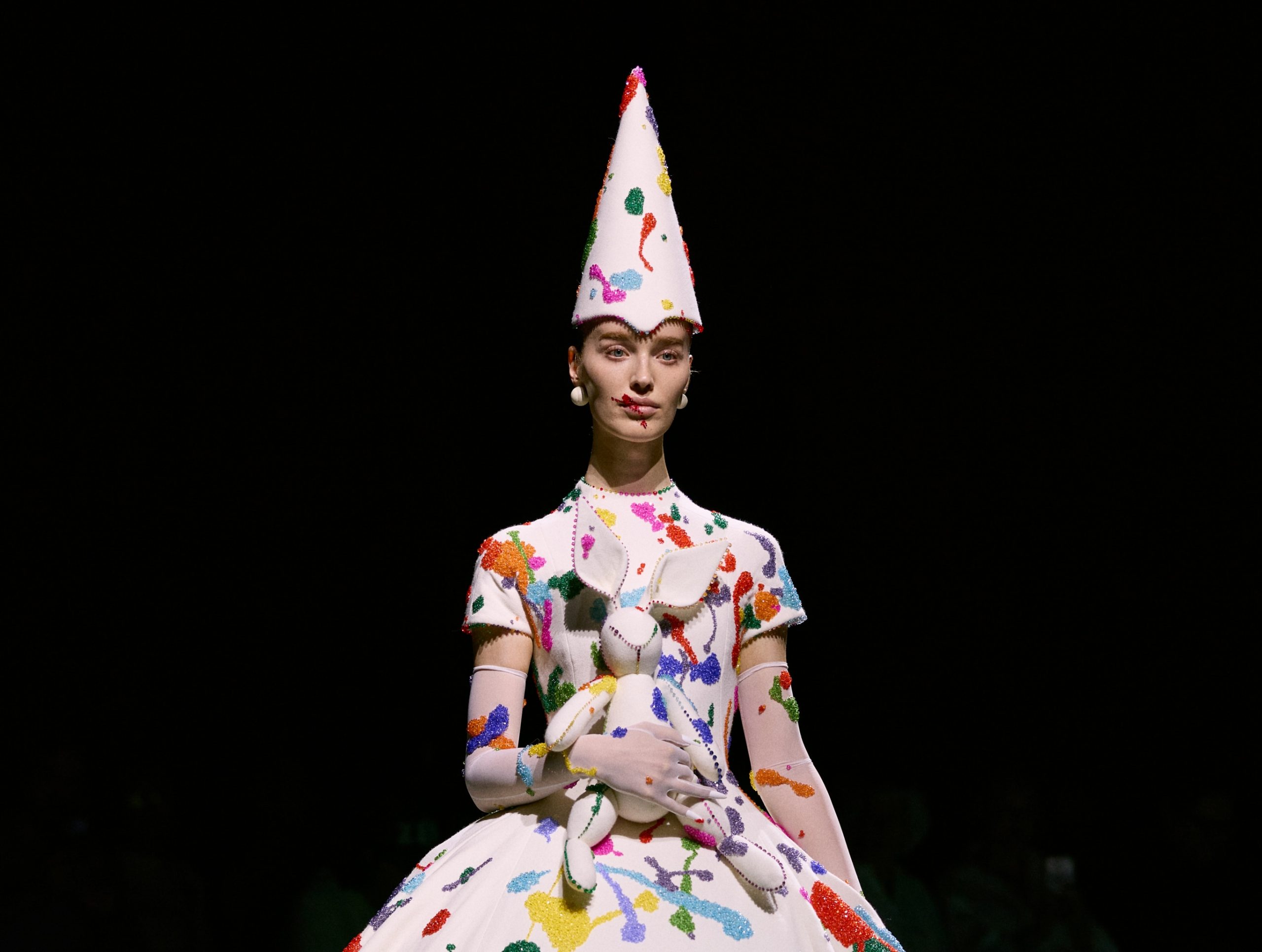
ROBERT WUN FW26
Baptiser une collection haute couture « Childsplay », c’est presque une insulte au métier. L’expression anglaise dit le sans-effort, l’enfantin, ce qui se règle en un tour de main et ne mérite aucun égard. Tout l’inverse, en somme, de ce que la couture représente : le temps patient, le geste rare, la difficulté érigée en valeur. Robert Wun le sait parfaitement, et c’est justement pour cela qu’il choisit ce mot. Il en fait le point de départ d’un raisonnement plutôt qu’une provocation gratuite. Sa question tient en une ligne : et si la sophistication la plus vertigineuse naissait de l’idée la plus élémentaire, celle qui consiste à regarder le monde avec des yeux d’enfant, avant que l’on apprenne à trier, à hiérarchiser, à juger ?
Présenté sous la coupole du Palais des Sports, dans le sud de Paris, à distance volontaire des adresses patrimoniales où la couture se met habituellement en scène, le défilé impose d’emblée son décalage. Une figure gonflable démesurée, empruntée à l’univers du personnage Skullpanda, domine le plateau, gardienne débonnaire d’un rituel que l’on a l’habitude de prendre très au sérieux. À chaque sortie, la salle réagit comme un public d’enfants devant un tour de magie. Le calcul est fin : en désarmant le spectateur, Wun le rend disponible à l’émotion.
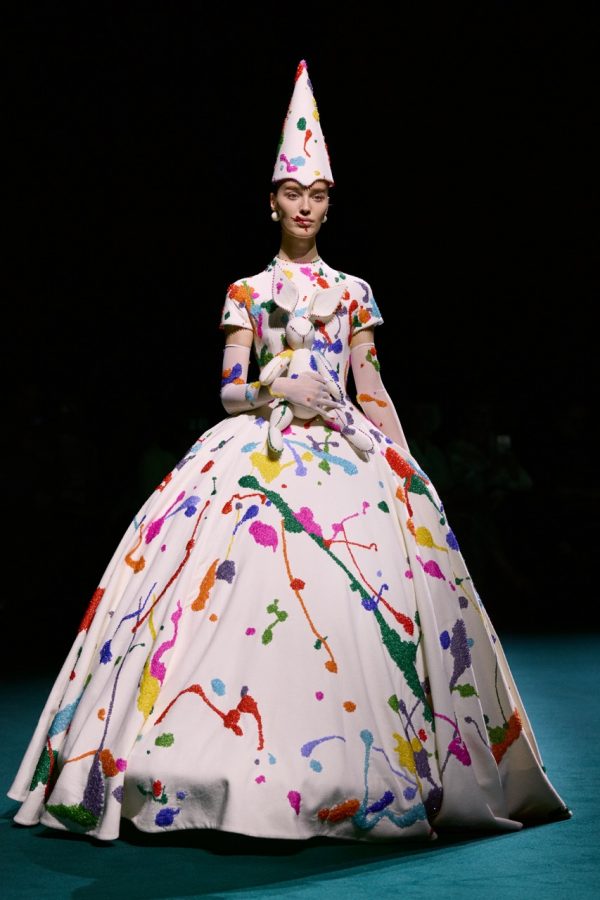
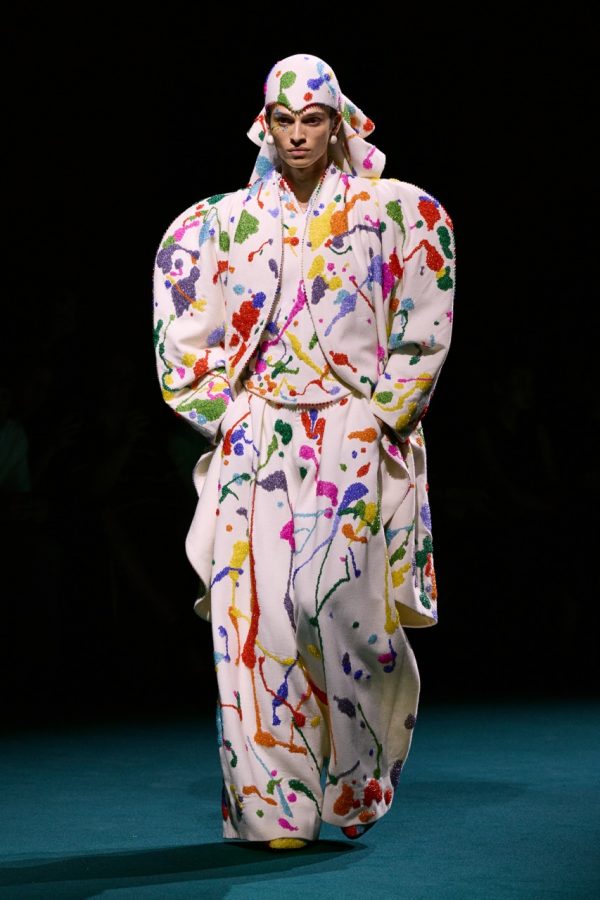
La collection avance comme une biographie condensée. Elle débute sur du blanc, la page vierge de l’existence, une robe volumineuse constellée de projections de couleur qui évoquent la gaieté brouillonne d’un enfant lâché avec un pot de peinture. Sauf que chaque éclaboussure est en réalité brodée et sertie, minutieusement, à la main. Là réside toute la thèse de la maison : ce qui ressemble au hasard demande des centaines d’heures de métier. Vient ensuite la mise en couleur du monde, saturée de primaires qui rappellent les cubes de construction et les pliages de papier, avant que la palette ne s’apaise en teintes de sable et de craie et que les arêtes tranchantes de ses silhouettes ne s’arrondissent, comme si l’on passait du jouet dur à la douceur consolante d’un doudou.
To call a haute couture collection ‘Childsplay’ is almost an affront to the craft. The English word speaks of the effortless, the childish, the thing dispatched in a single gesture and owed no particular regard. The precise opposite, in other words, of what couture stands for: patient time, the rare gesture, difficulty elevated into a value. Robert Wun knows this perfectly well, and it is exactly why he reaches for the word. He makes it the starting point of an argument rather than an easy provocation. His question fits in a single line. What if the most vertiginous sophistication were born of the most elementary idea, the one that consists in looking at the world through a child’s eyes, before we learn to sort, to rank, to judge?
Staged beneath the dome of the Palais des Sports in the south of Paris, at a deliberate remove from the heritage addresses where couture usually stages itself, the show announces its dissonance from the outset. An outsized inflatable figure, borrowed from the world of the Skullpanda character, presides over the floor, the good-natured guardian of a ritual we are used to taking very seriously. With each exit, the audience reacts like a roomful of children before a magic trick. The calculation is a fine one: by disarming the viewer, Wun leaves them open to feeling.
The collection unfolds like a compressed biography. It opens on white, the blank page of existence, a voluminous gown scattered with bursts of colour that evoke the messy glee of a child let loose with a pot of paint. Except that every splash is in fact embroidered and set by hand, painstakingly. Here lies the whole thesis of the house: what looks like chance demands hundreds of hours of craft. Then comes the colouring-in of the world, saturated with primaries that recall building blocks and folded paper, before the palette settles into shades of sand and chalk and the sharp edges of the silhouettes round themselves off, as though we were passing from the hard toy to the consoling softness of a comfort blanket.
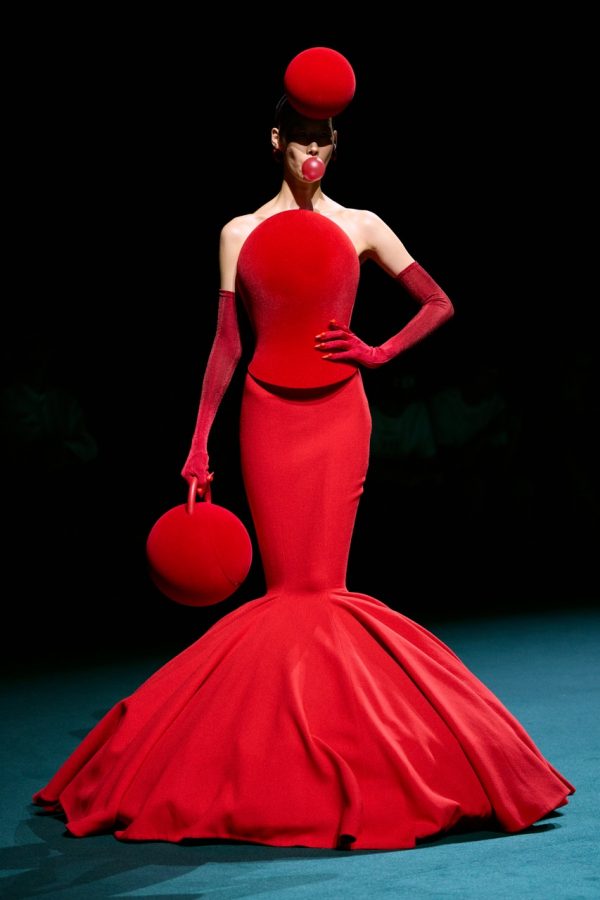
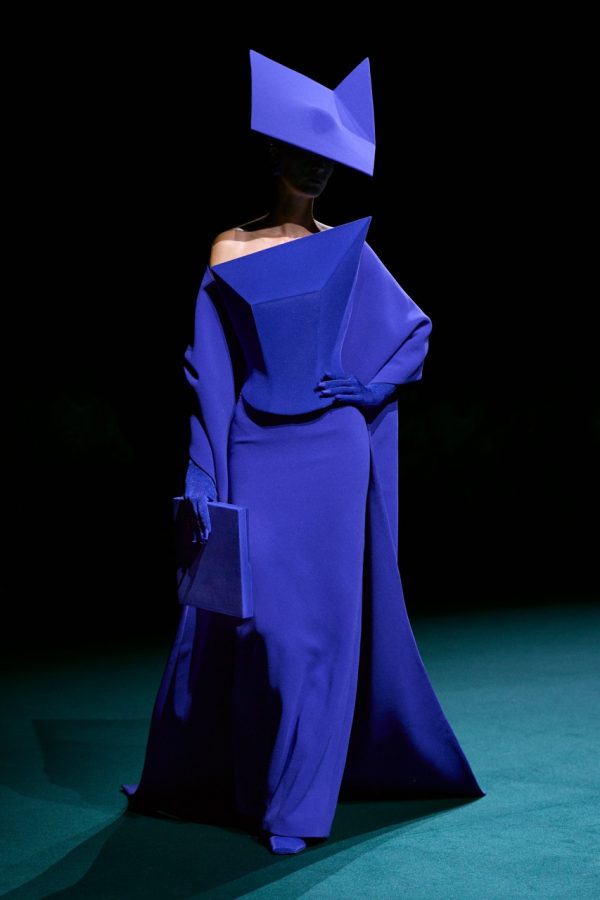
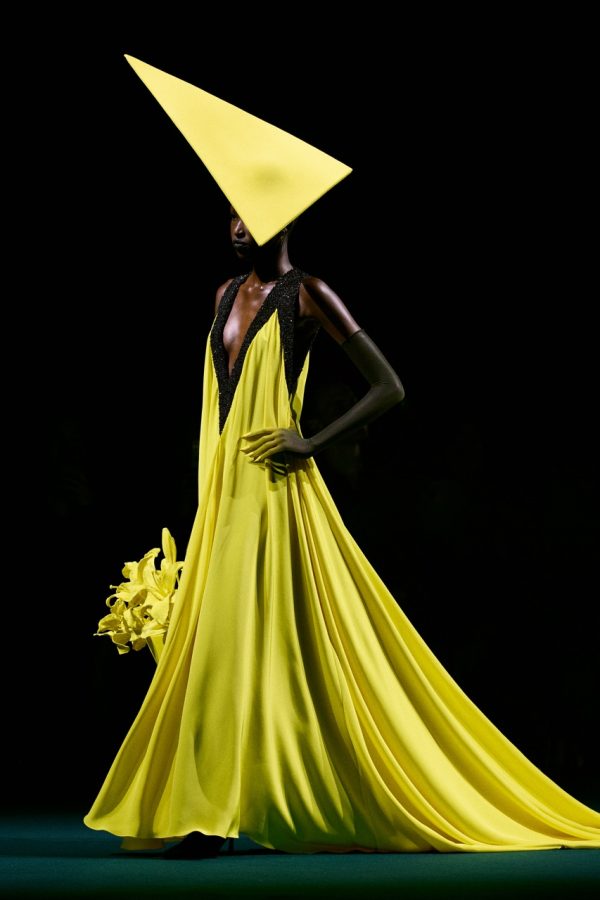
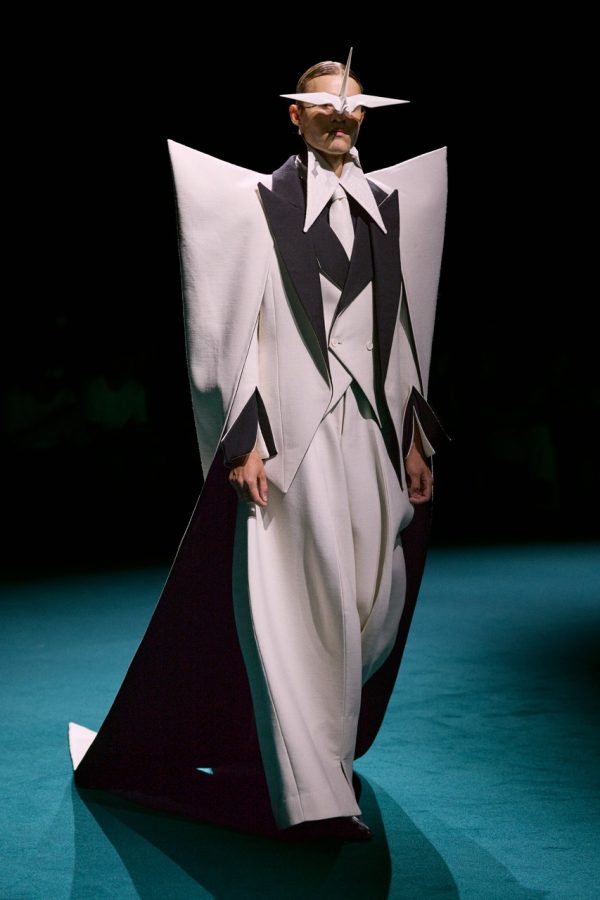
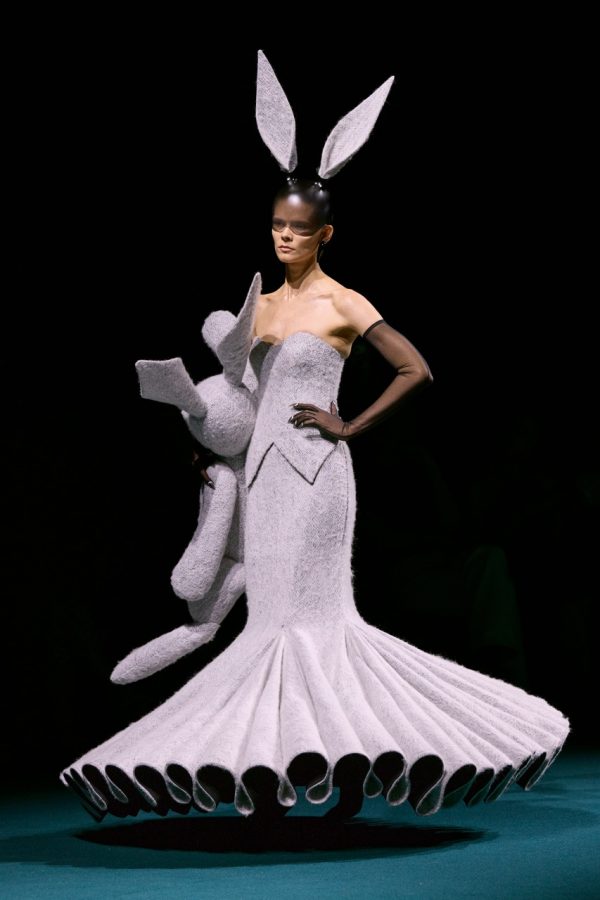
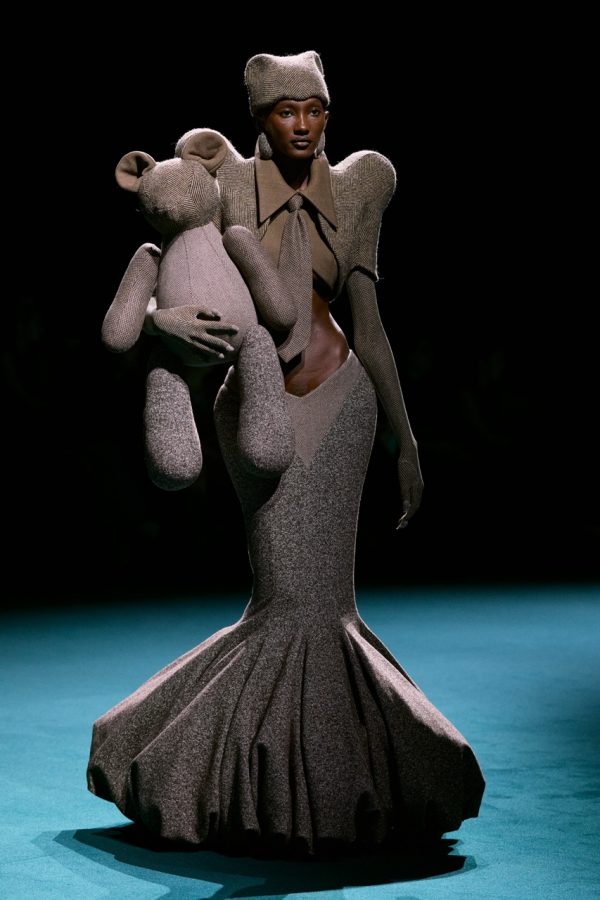
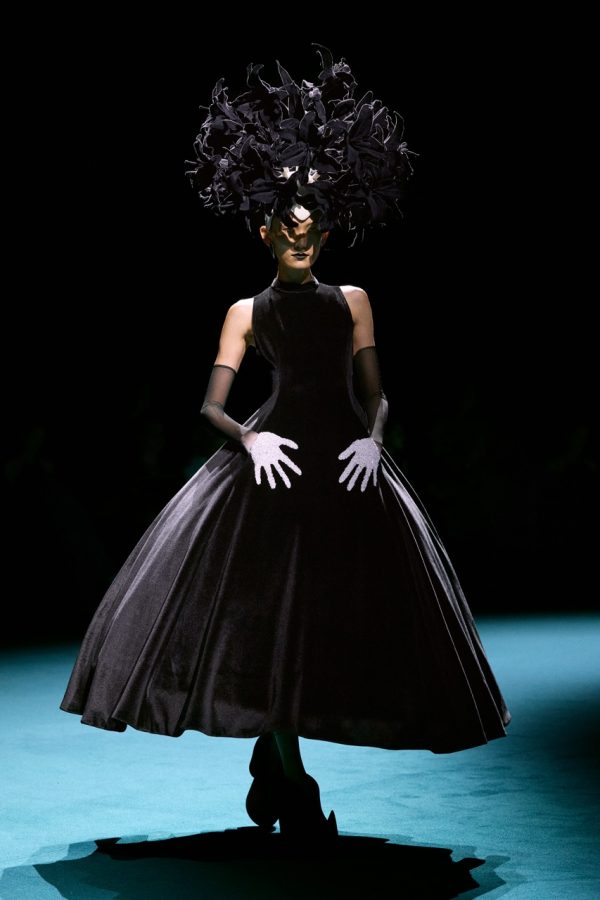
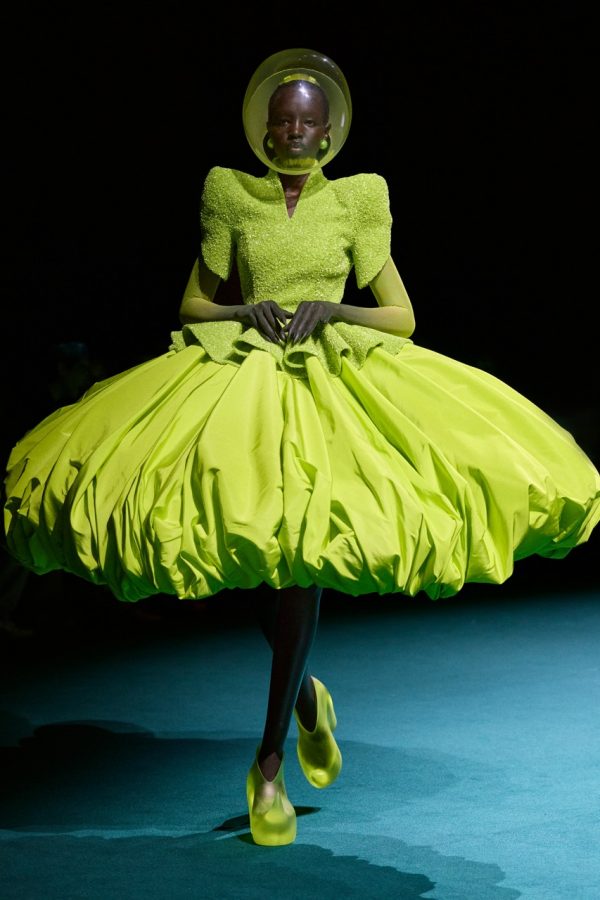
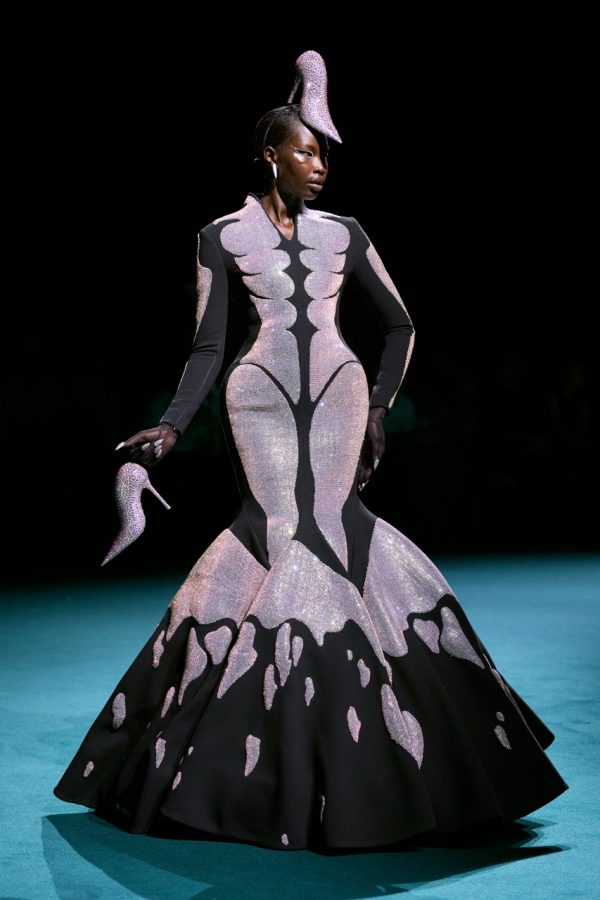
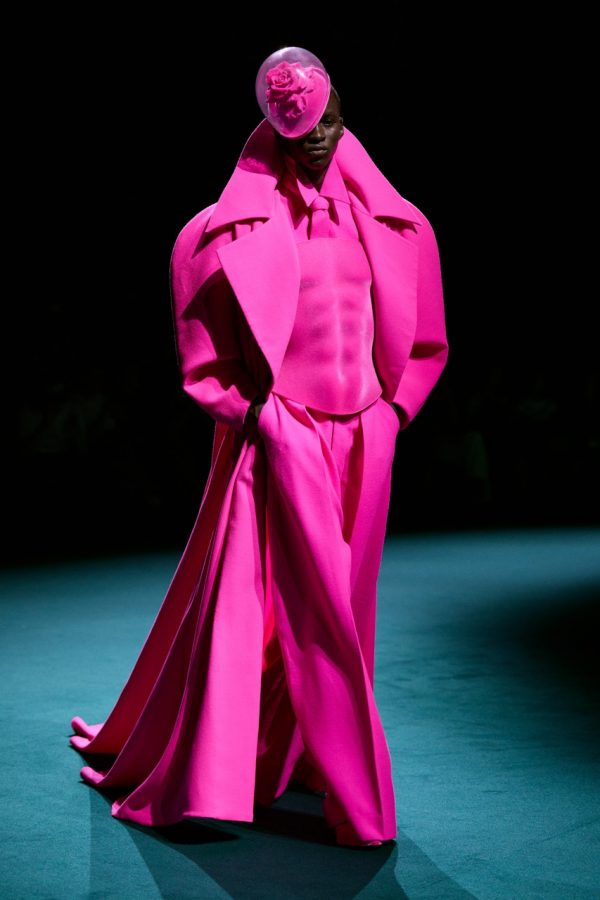
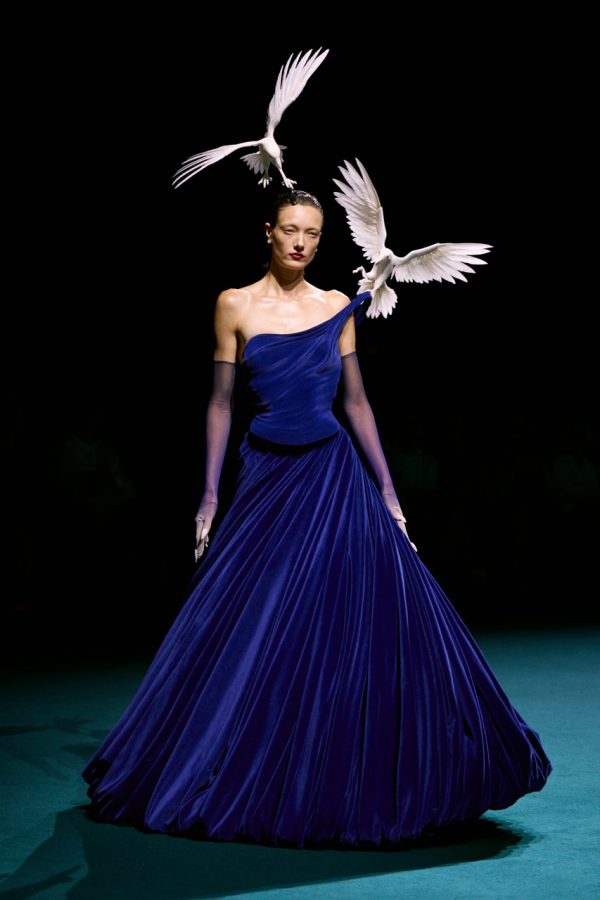
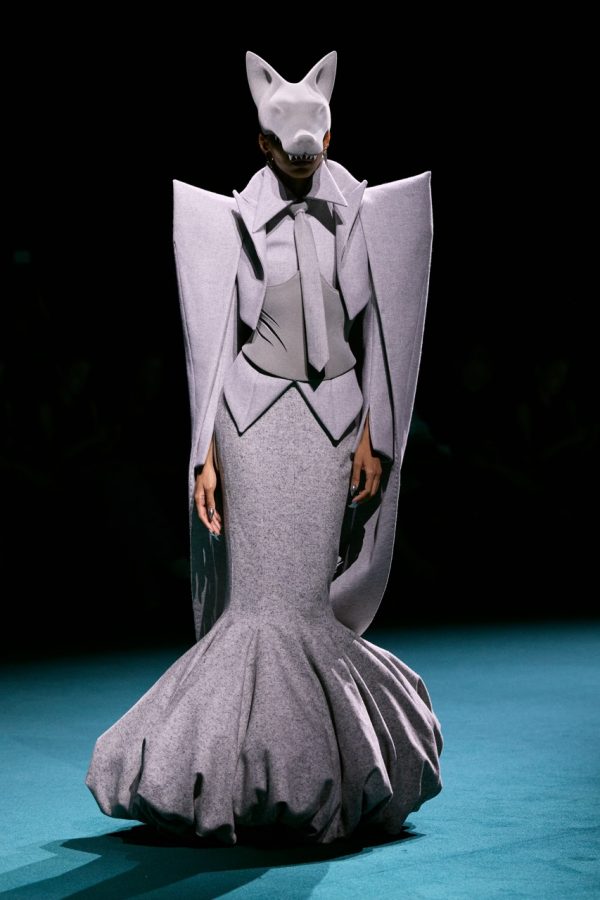
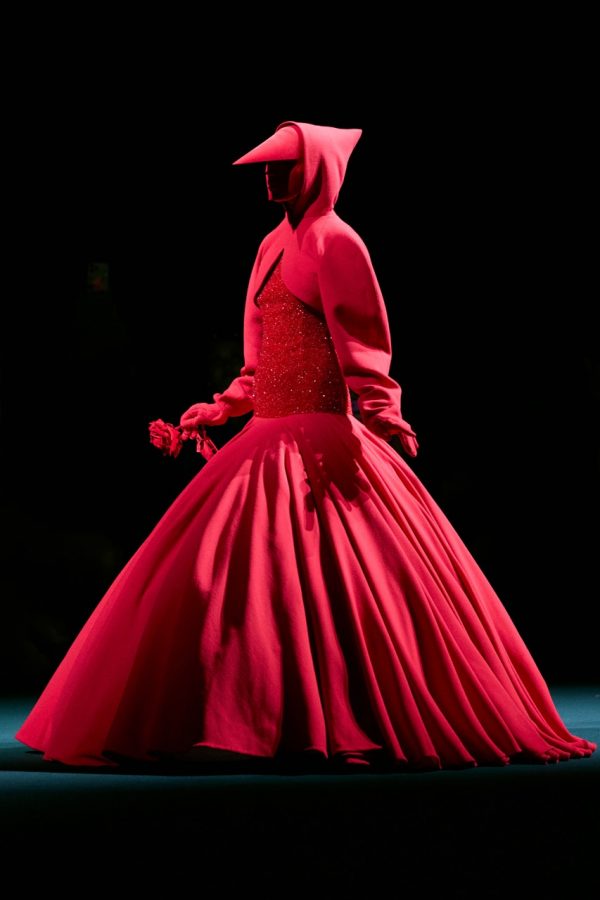
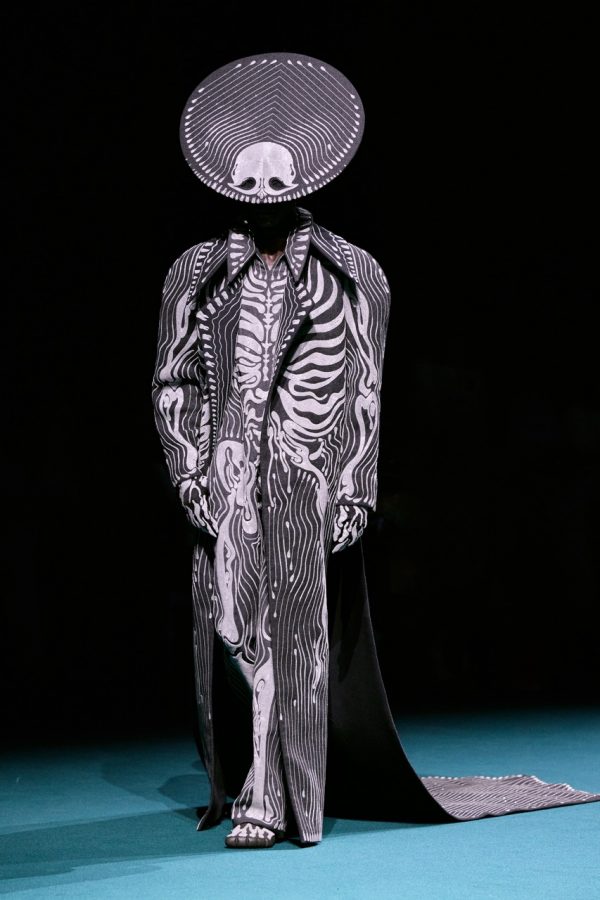
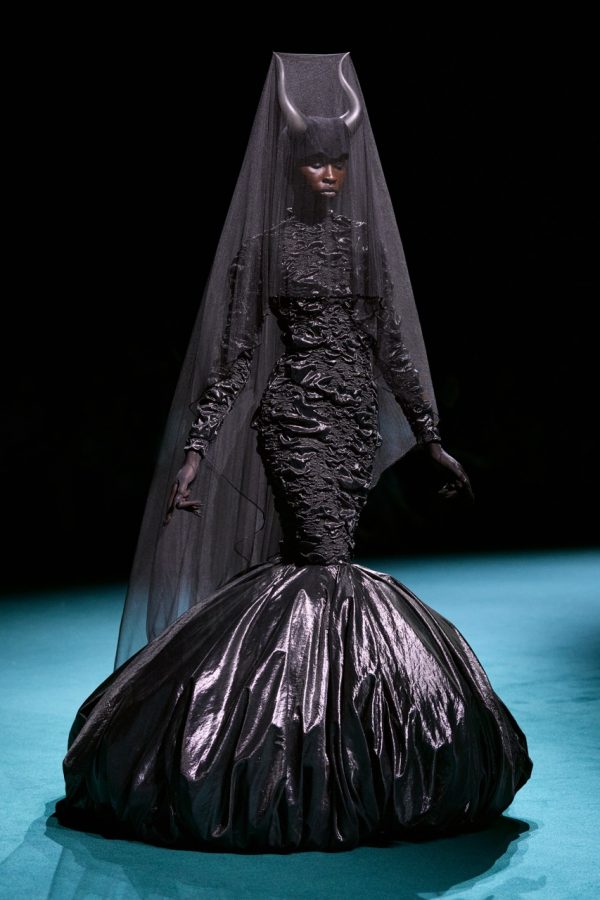
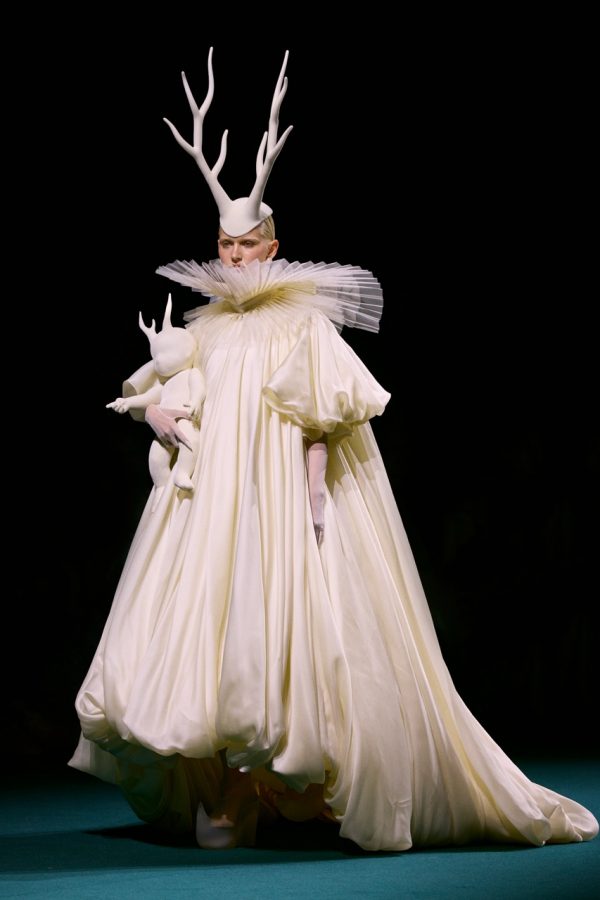
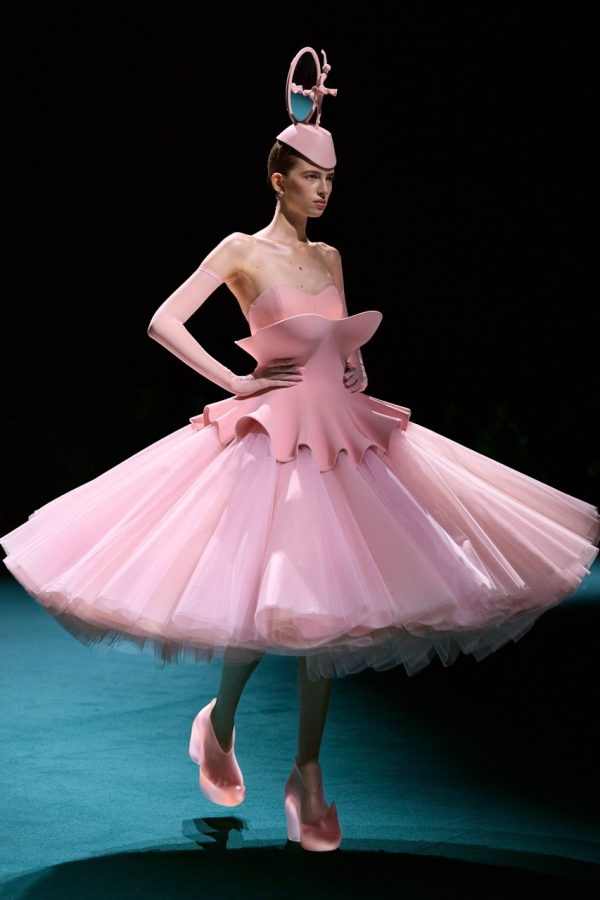
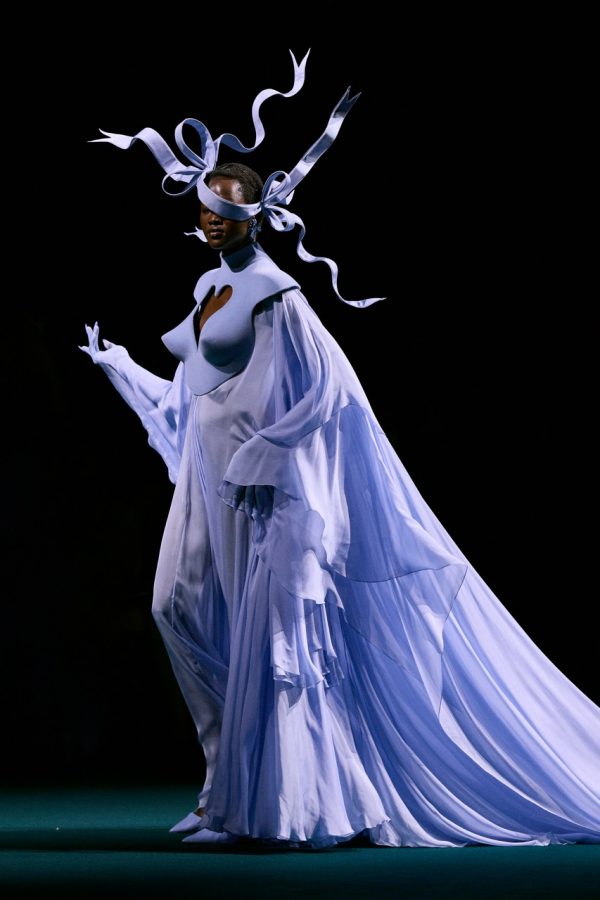
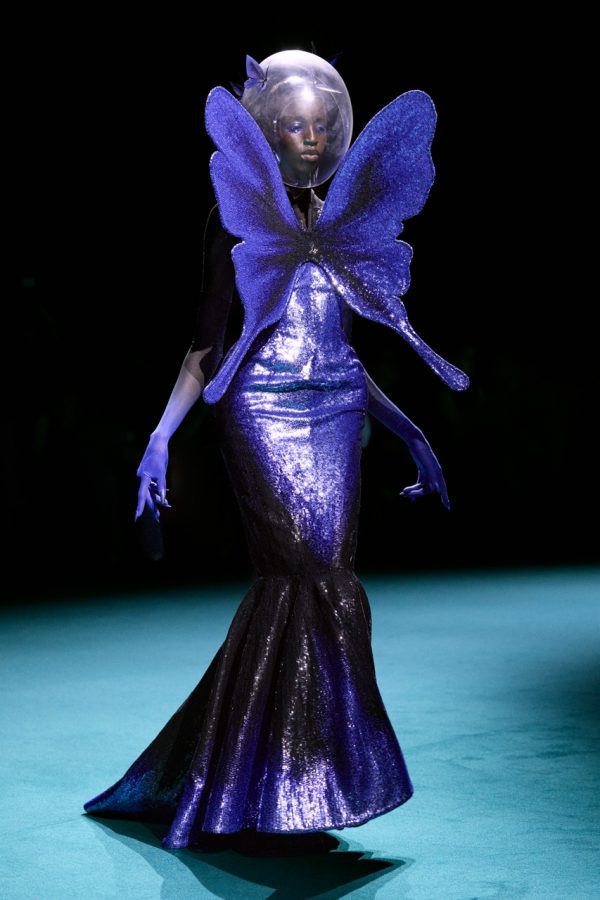
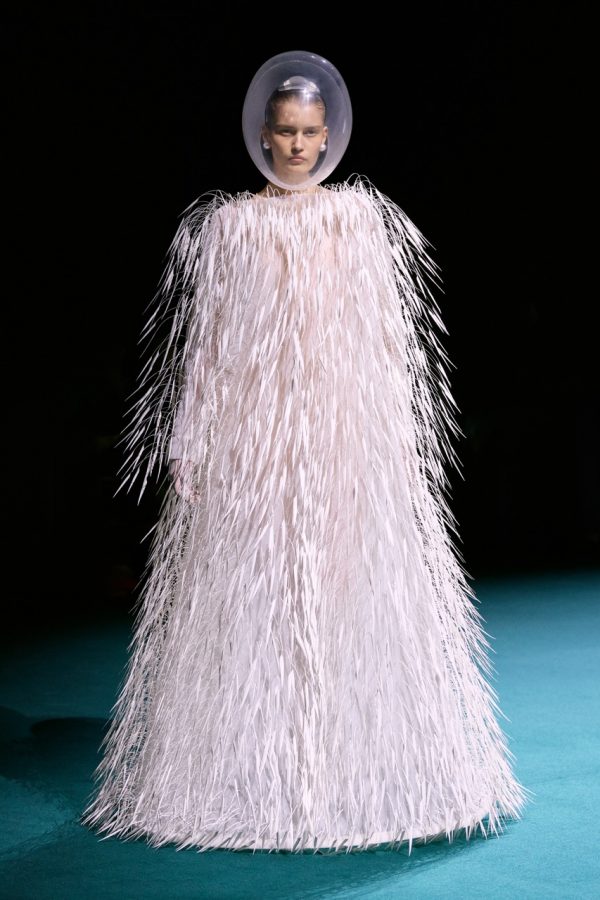
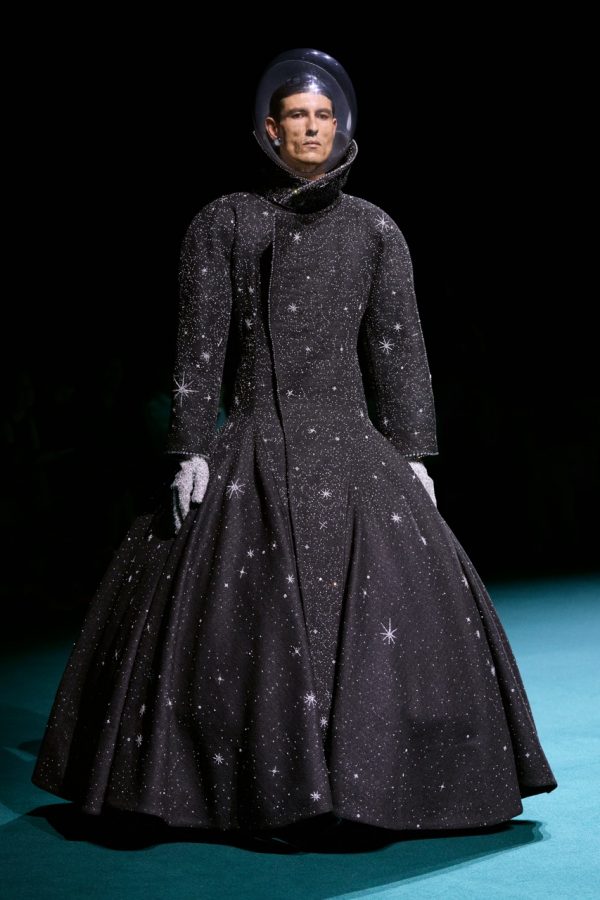
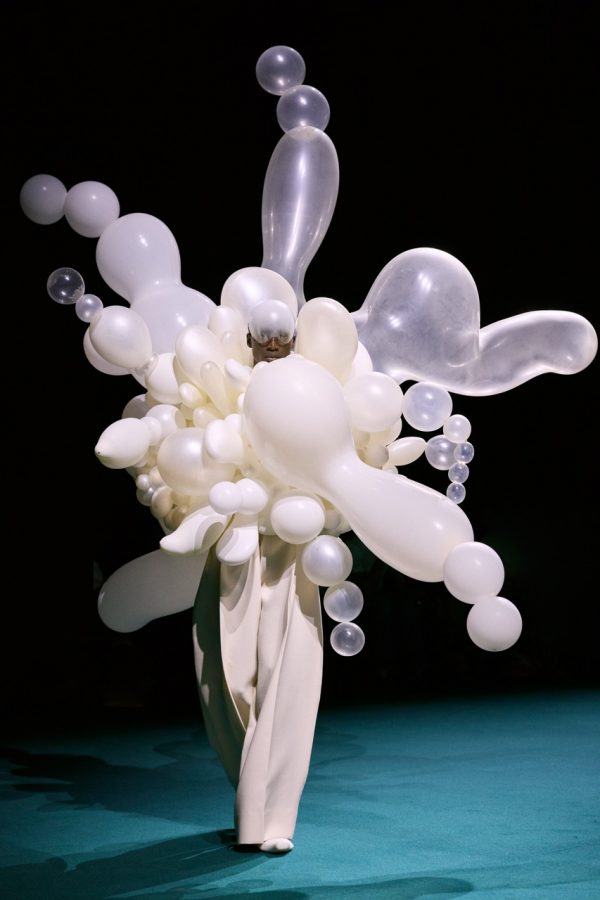
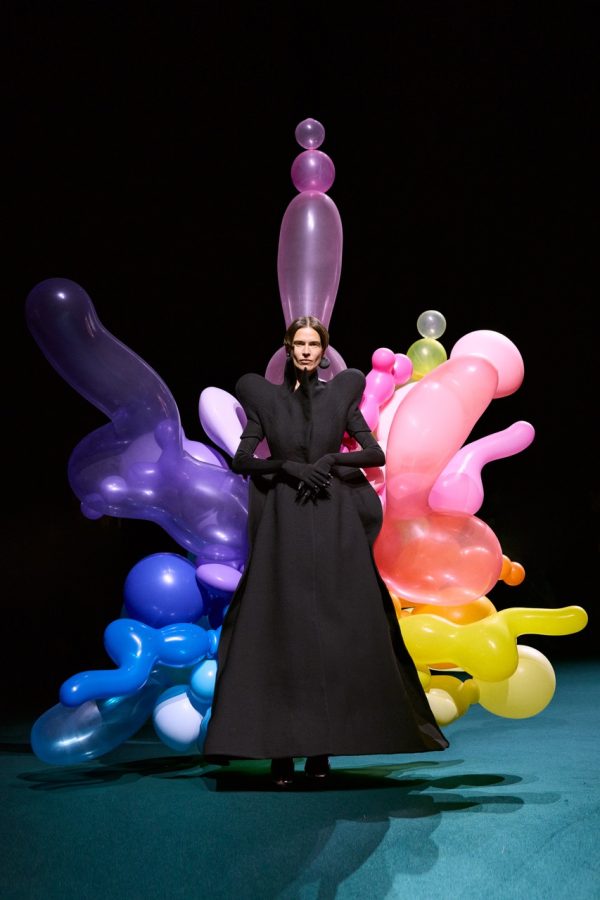
Fidèle à son surréalisme habituel, le créateur ne cite jamais l’enfance au premier degré. Il la déforme. Des casques translucides coiffent certaines silhouettes, souvenir d’un rêve d’astronaute contrarié de sa propre jeunesse. Une danseuse en tulle rose porte, en équilibre sur la tête, la figurine mécanique d’une boîte à musique. Ailleurs, des ballons gonflés jaillissent pour de bon de costumes stricts, faisant exploser la couleur hors de corps sages et cravatés. L’image est belle et cruelle à la fois : le ballon est joyeux, éclatant, et condamné à se dégonfler. Comme l’enfance elle-même, que chacun continue de porter en soi bien après l’avoir perdue.
Ce refus du cynisme n’a rien d’anodin dans le climat actuel. La haute couture traverse une crise de sens, prise en étau entre héritage à honorer et pression commerciale permanente. En affirmant que le courage de créer devrait toujours l’emporter sur l’envie de consommer, Wun formule tout haut ce que beaucoup de directeurs artistiques n’osent plus revendiquer. Il ne s’agit pas de fabriquer un objet de désir de plus, mais de réveiller quelque chose d’oublié.
L’exercice demeure, bien sûr, un spectacle de mode, avec ses partenaires et son économie. La collection prolonge d’ailleurs cette collaboration au-delà du podium, les artisans du cristal et du maquillage y apportent leur part de virtuosité, et chaque invité repart avec sa pièce de collection. Mais l’essentiel se joue au-delà du décor. En trois ans à peine, Robert Wun s’est imposé parmi les voix qui pèsent le plus à Paris, et « Childsplay » en administre la preuve : la nouvelle génération de la couture ne cherche plus à égaler ses aînés, elle leur rappelle ce qu’ils ont parfois oublié en route, à savoir que l’imagination reste le seul luxe que l’argent ne fabrique pas.
True to his habitual surrealism, the designer never cites childhood at face value. He distorts it. Translucent helmets cap certain silhouettes, the trace of a thwarted astronaut’s dream from his own youth. A dancer in pink tulle carries, balanced on her head, the mechanical figurine of a music box. Elsewhere, inflated balloons burst for real out of severe tailoring, sending colour exploding from prim, tie-knotted bodies. The image is beautiful and cruel at once: the balloon is joyful, vivid, and condemned to deflate. Like childhood itself, which each of us goes on carrying long after we have lost it.
This refusal of cynicism is anything but incidental in the present climate. Haute couture is passing through a crisis of meaning, caught between a heritage to honour and a constant commercial pressure. In insisting that the courage to create should always outweigh the urge to consume, Wun says aloud what many creative directors no longer dare to claim. The point is not to manufacture one more object of desire, but to wake something that has been forgotten.
The exercise remains, of course, a fashion spectacle, with its partners and its economy. The collection extends that collaboration beyond the runway; the artisans of crystal and of make-up bring their own share of virtuosity, and every guest leaves with a collector’s piece. Yet the essential thing plays out beyond the set. In barely three years, Robert Wun has established himself among the voices that carry the most weight in Paris, and ‘Childsplay’ supplies the proof. Couture’s new generation no longer seeks to equal its elders; it reminds them of what they have sometimes forgotten along the way, that imagination remains the only luxury money cannot manufacture.
You may also like
CFCL : Vol.12
On ne s’attend pas à ce qu’une marque de maille japonaise créée en plein confinement
KIDILL SS27
Le créateur japonais avait une patte reconnaissable en trois secondes. Il vient de la démonter. «
424 : ARTEFACT
Guillermo Andrade élève le rebut au rang d’œuvre. Sa collection automne-hiver 2026 interro