
LLOSA SS27
Le récit sert souvent d’emballage dans la mode. Chez LLOSA, il fonctionne plutôt comme un cahier des charges. La maison place sa collection printemps-été 2027 dans le sillage d’une figure nomade qui progresse sur un sol aride, hors de la Terre, là où le paysage devient une étendue de pierre sans repère. Séduisant sur le papier, ce point de départ pourrait rester au stade du storytelling.
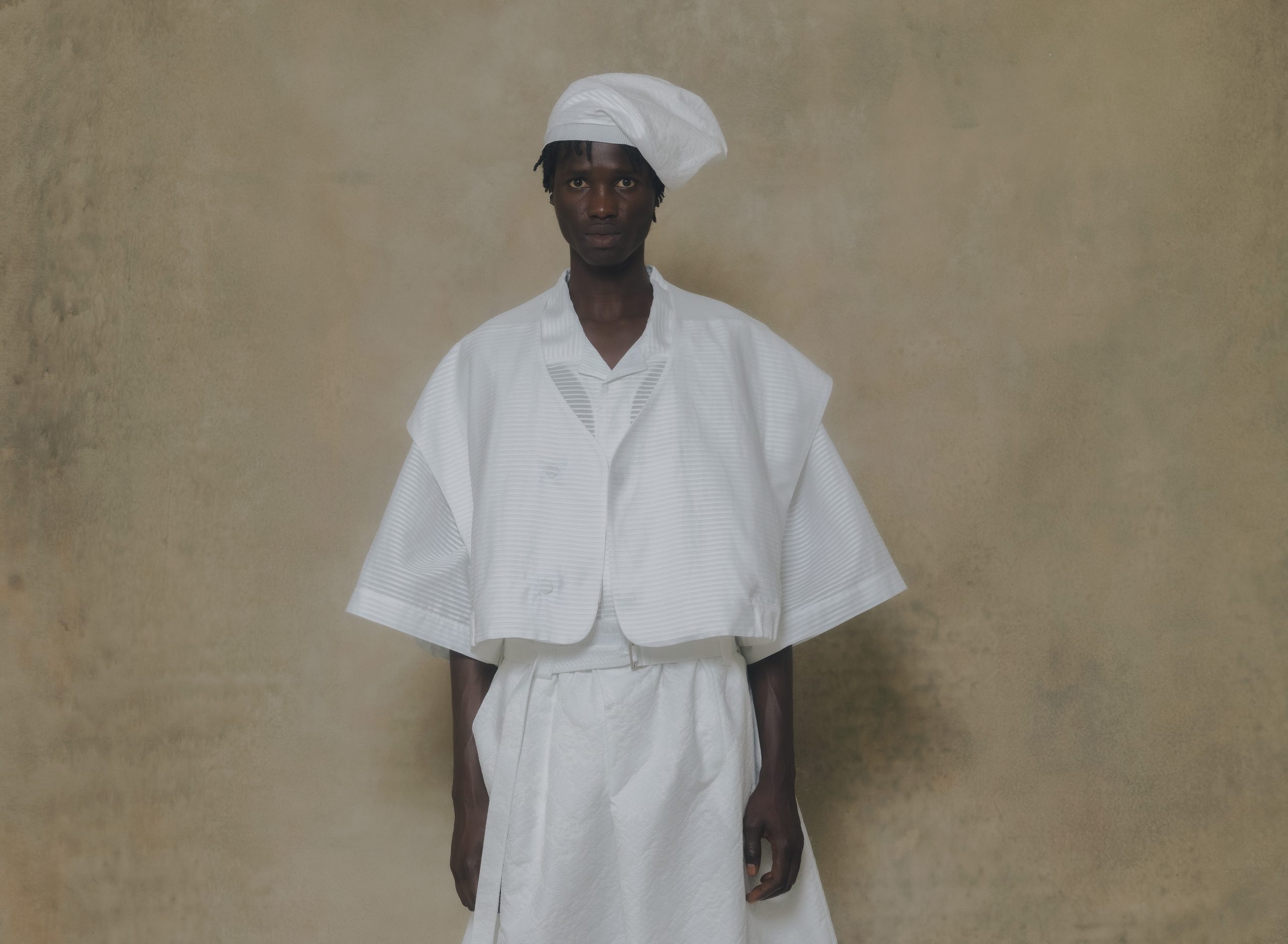
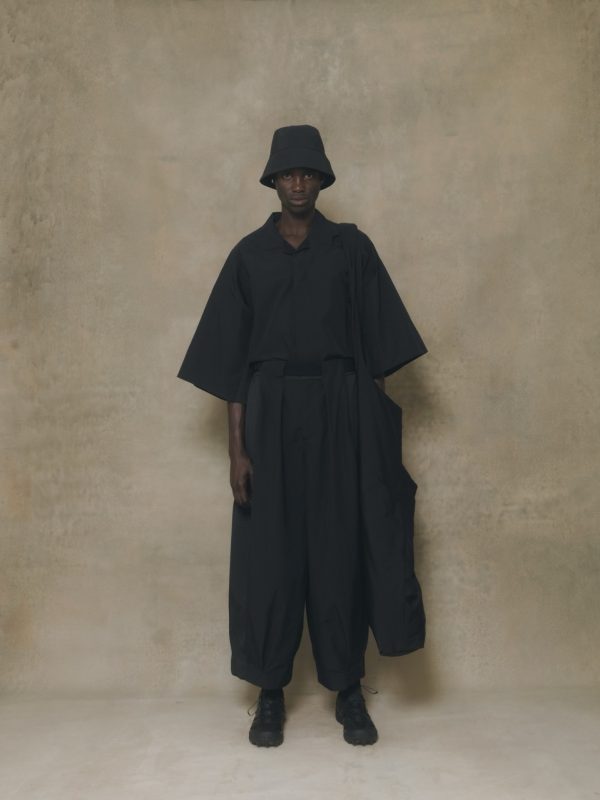
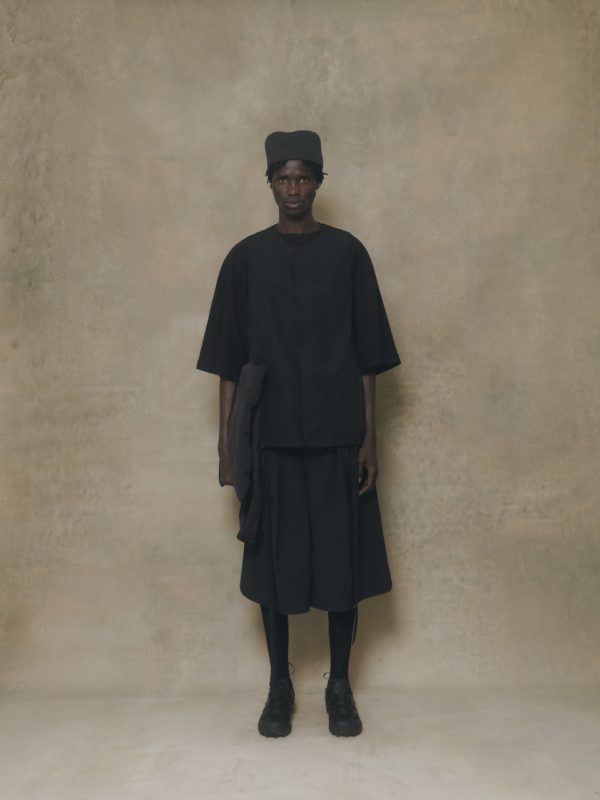
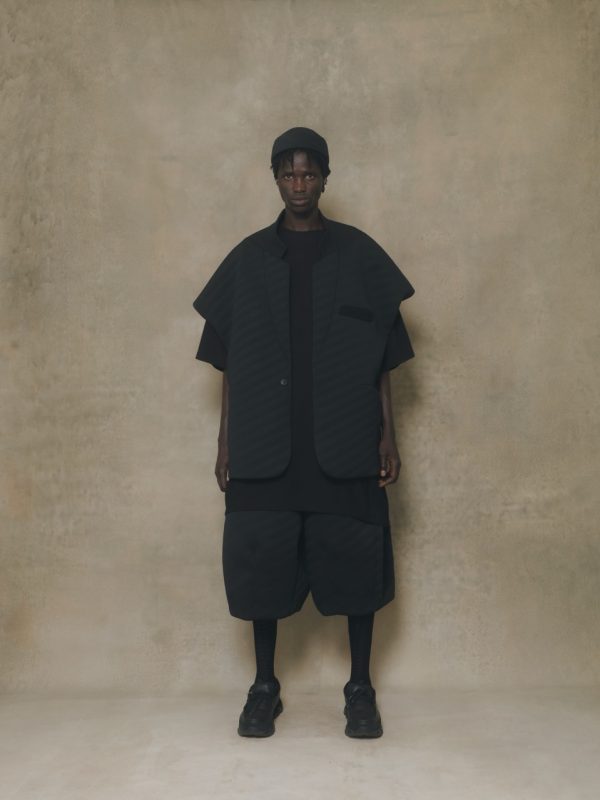
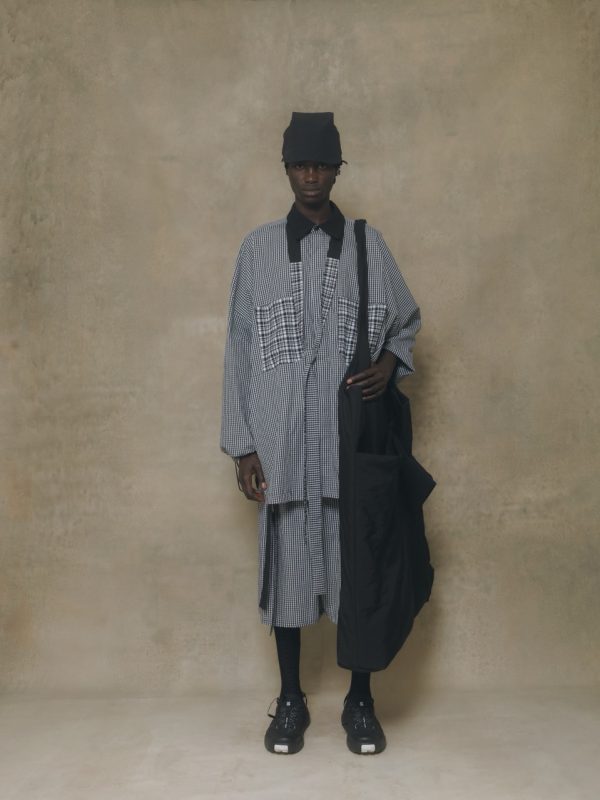
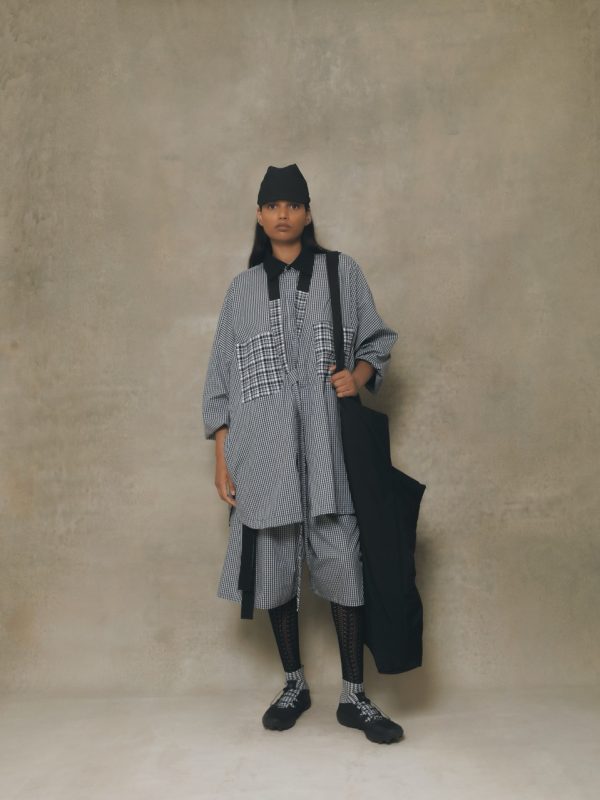
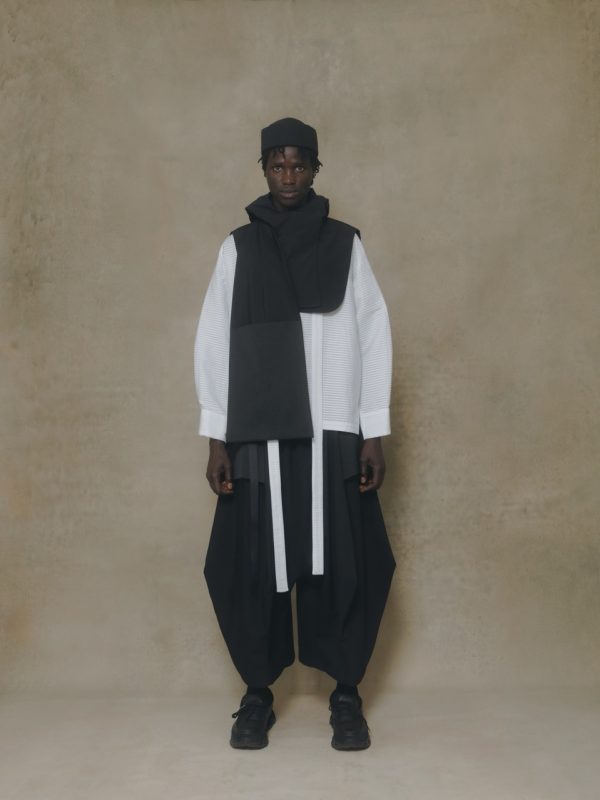
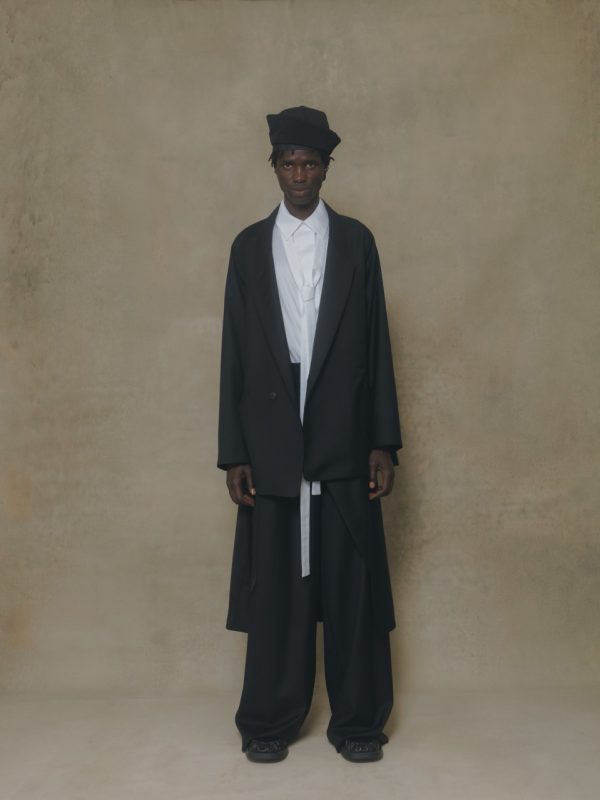
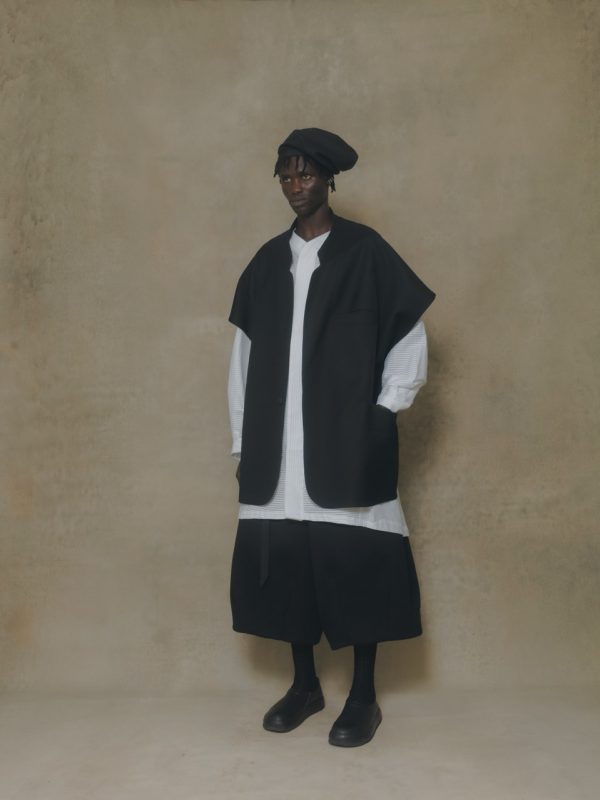
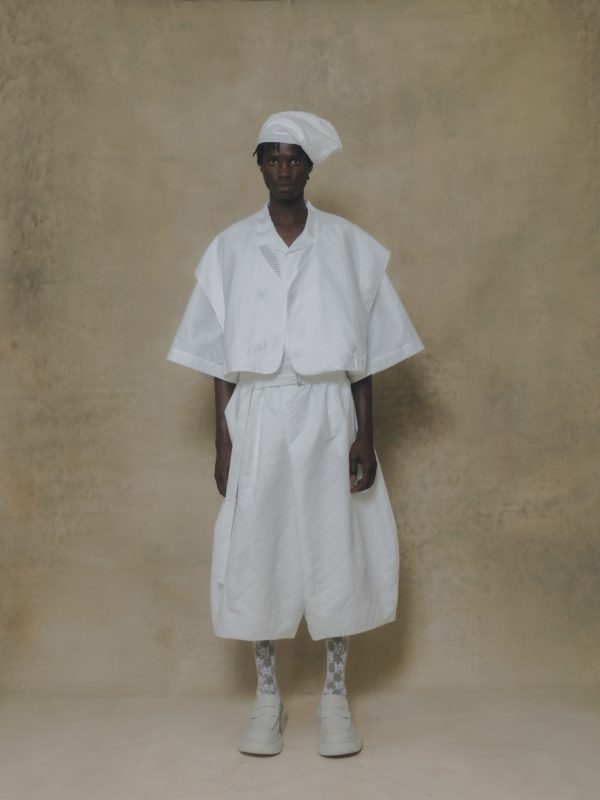
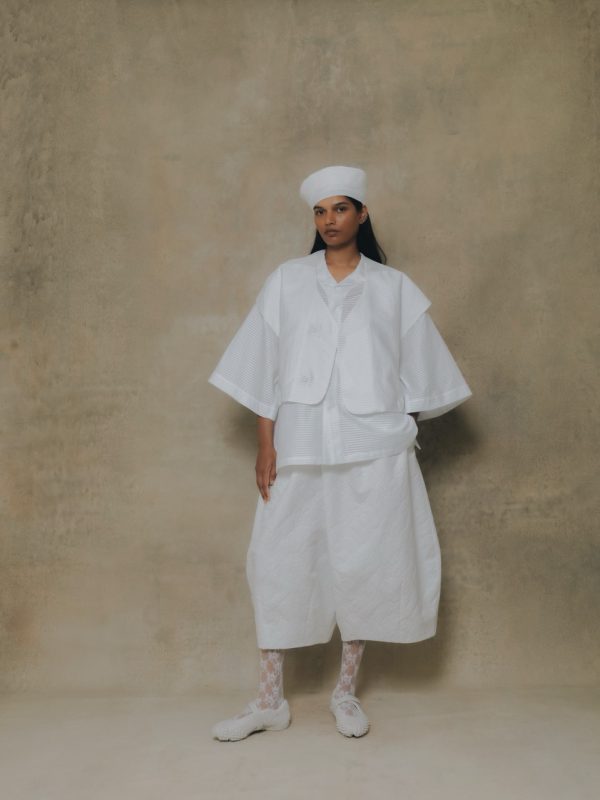
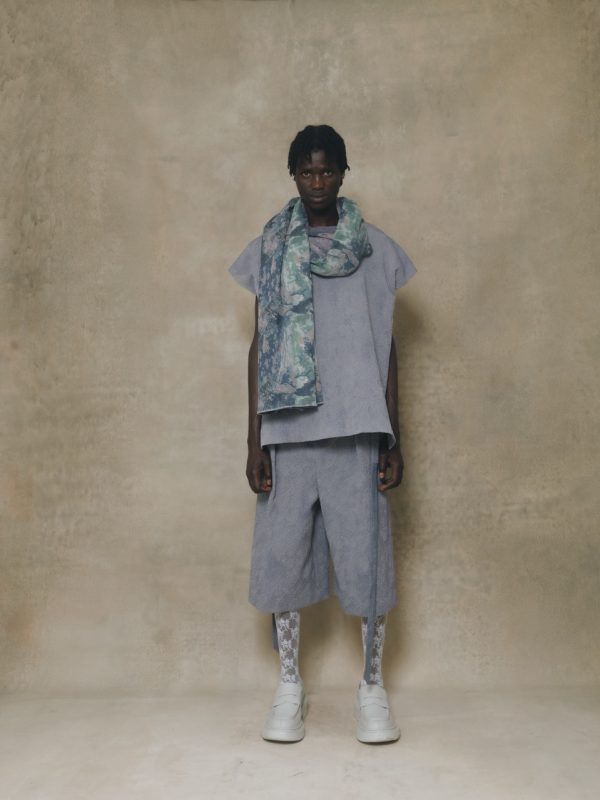
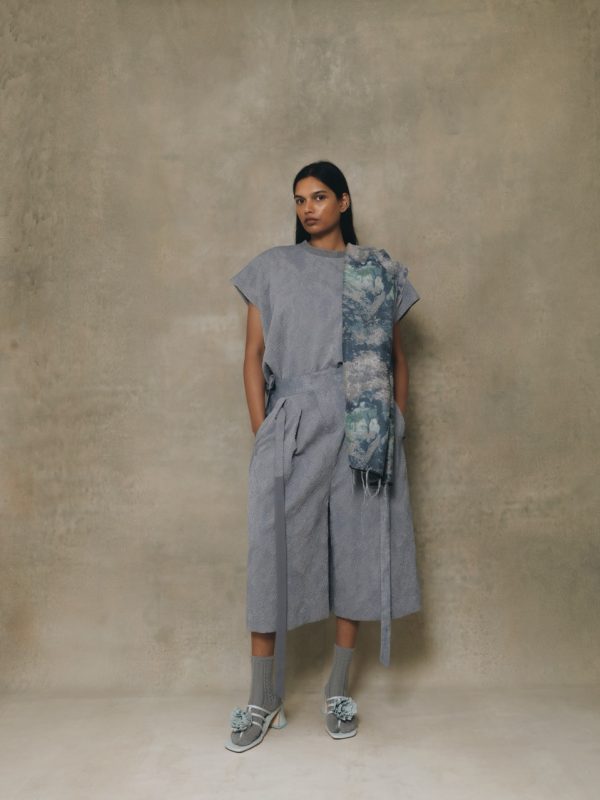
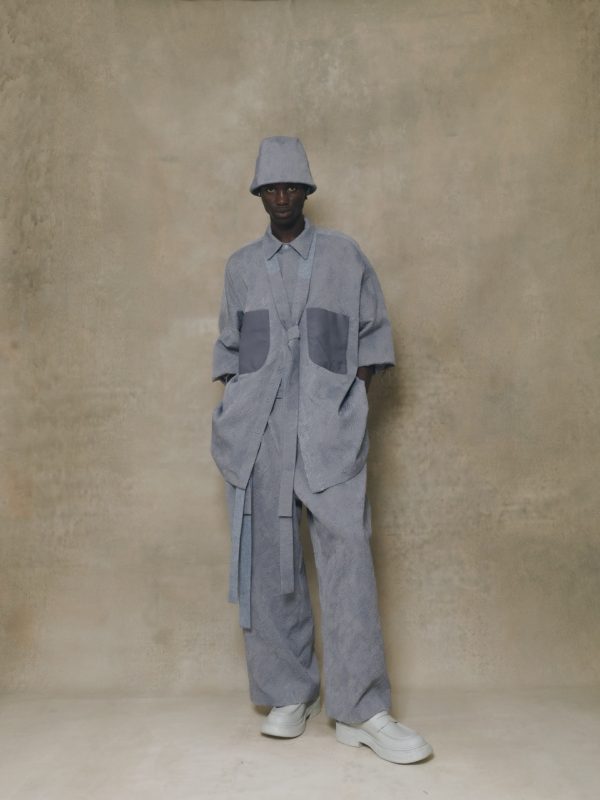
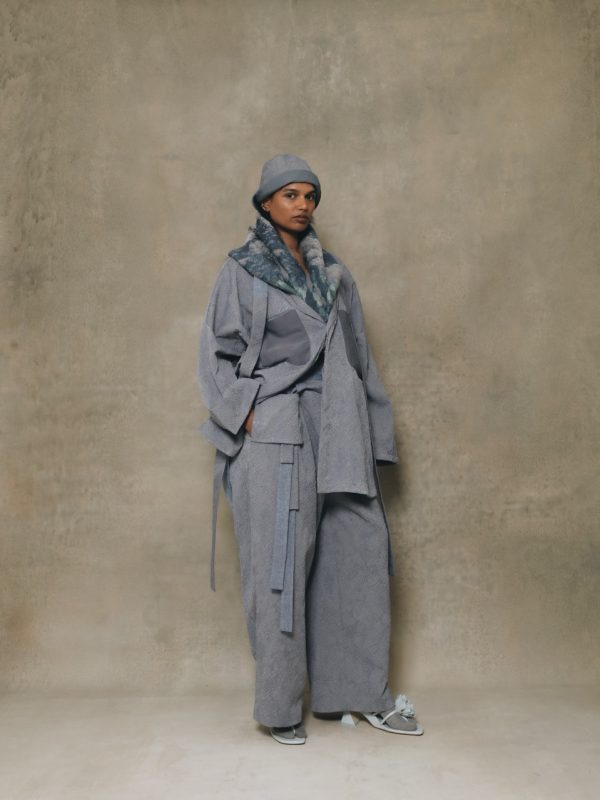
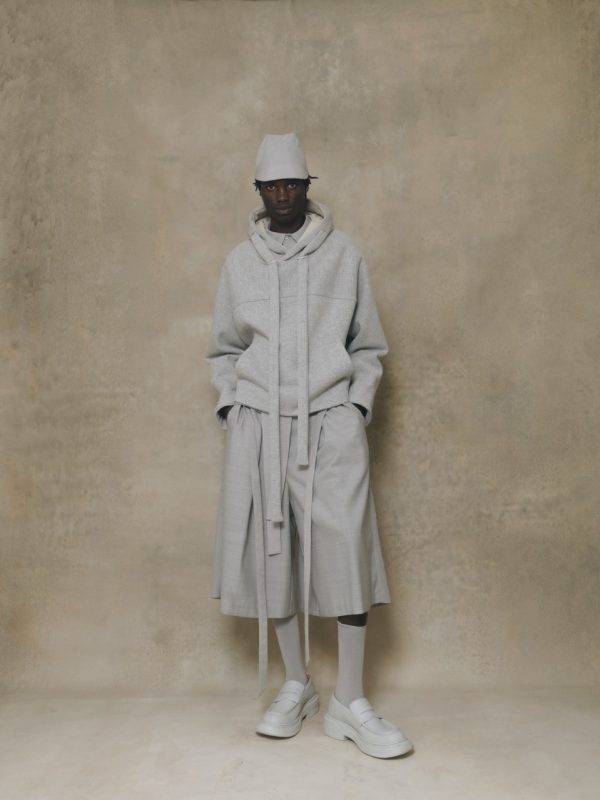
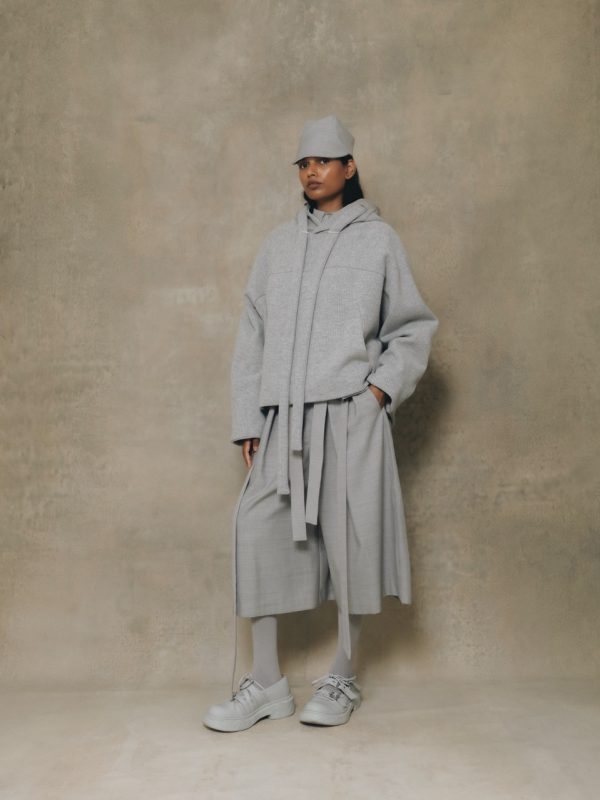
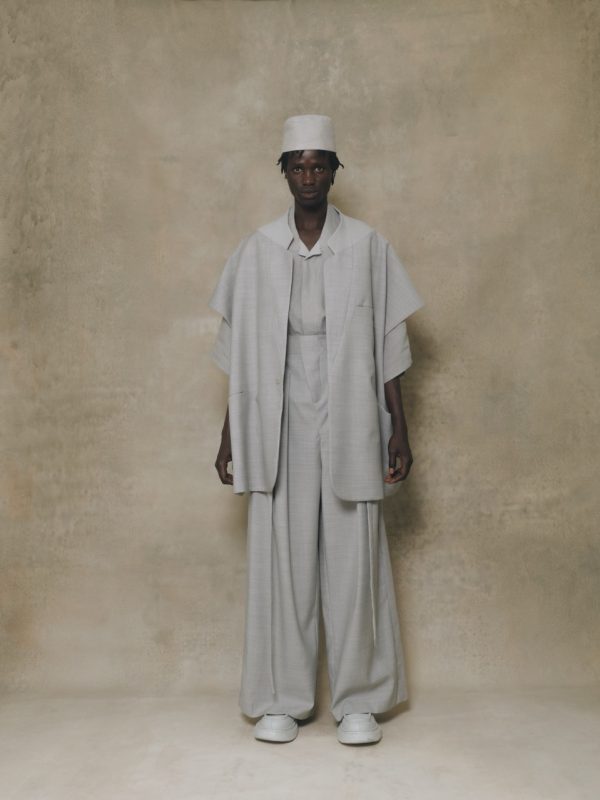
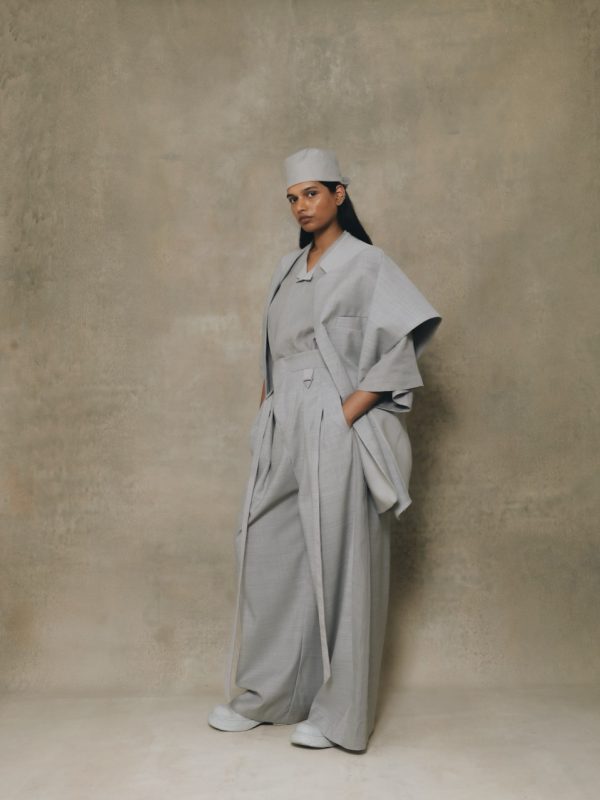
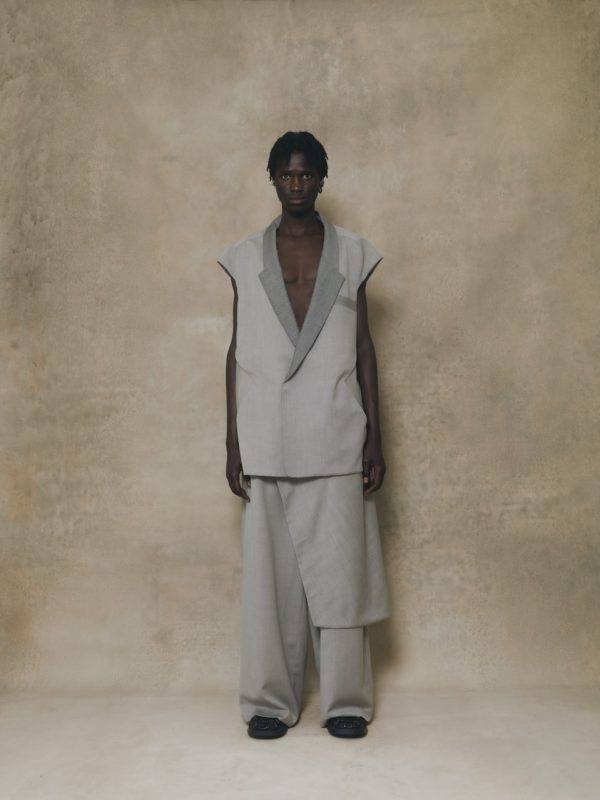
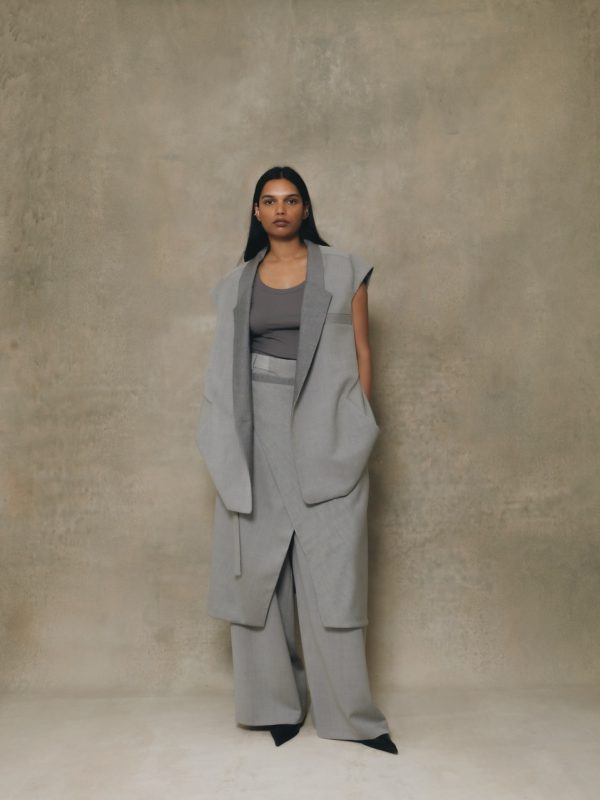
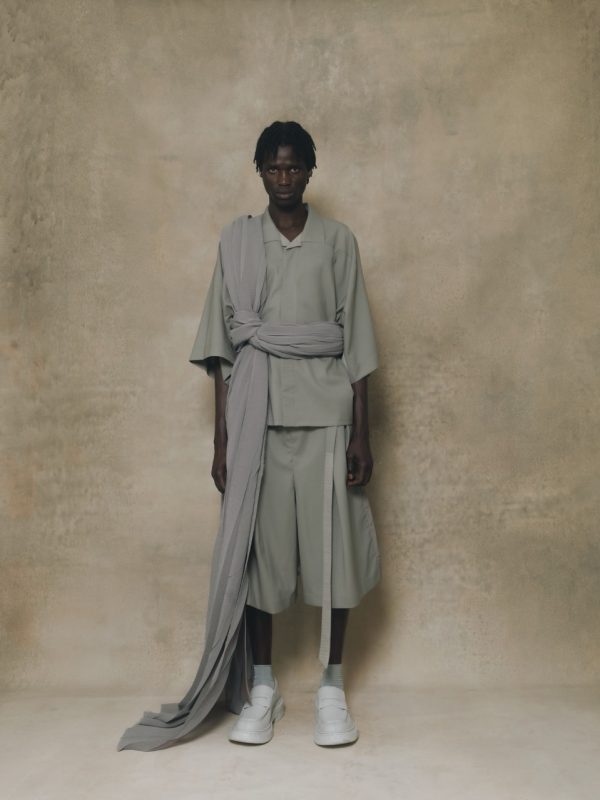
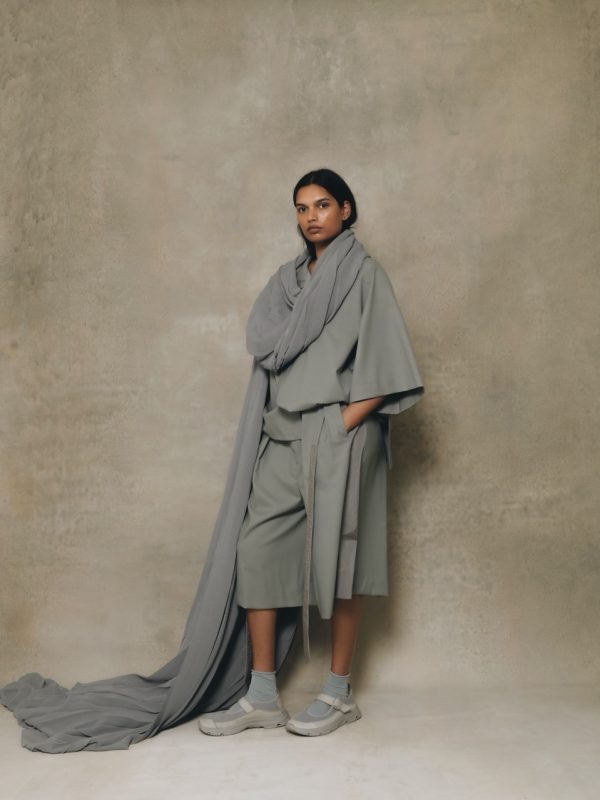
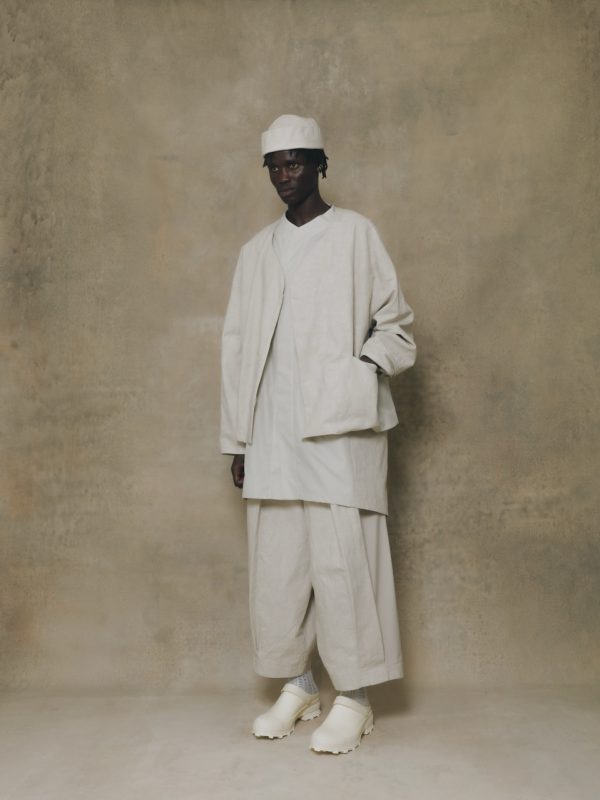
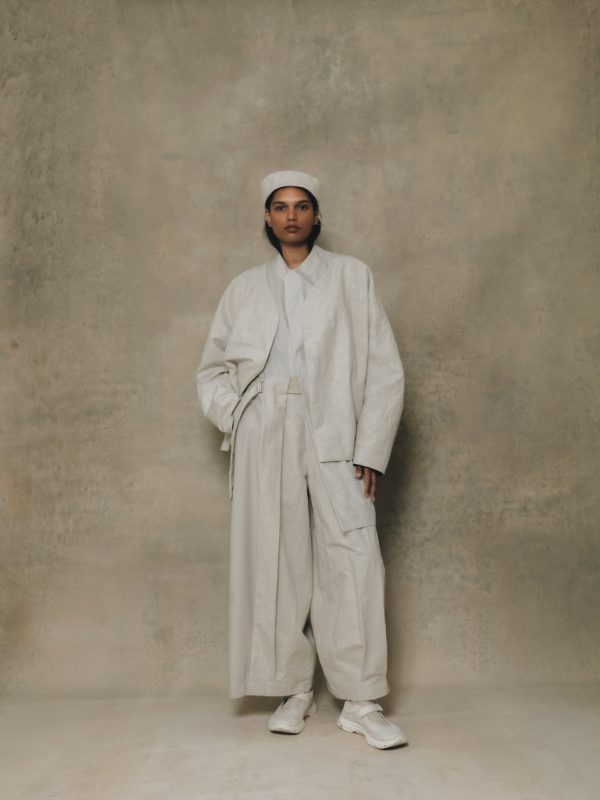
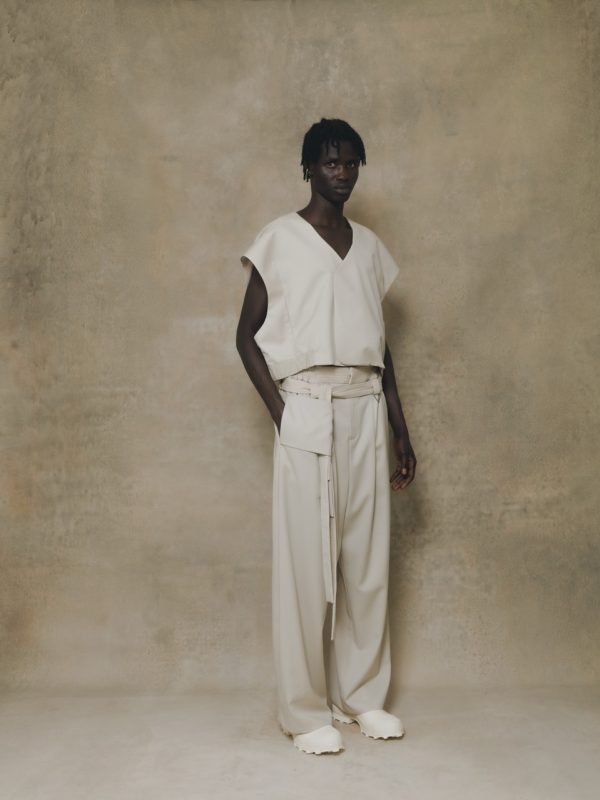
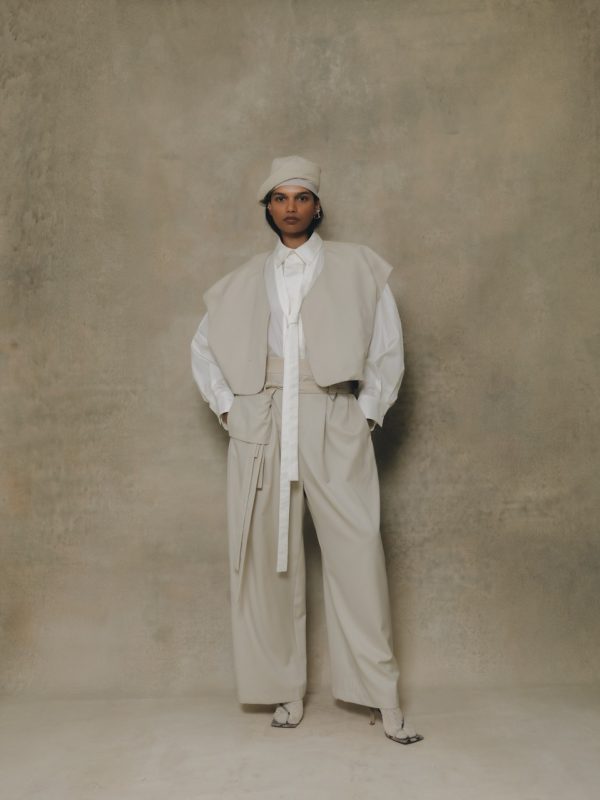
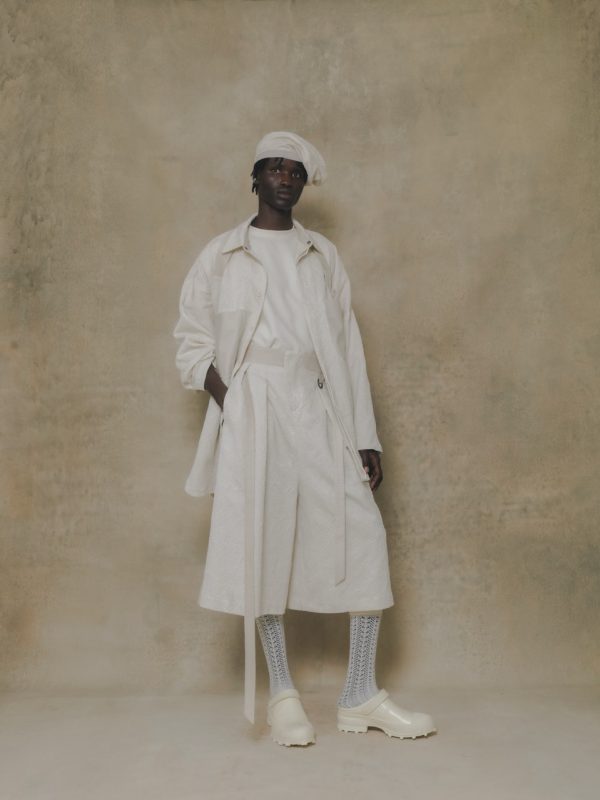
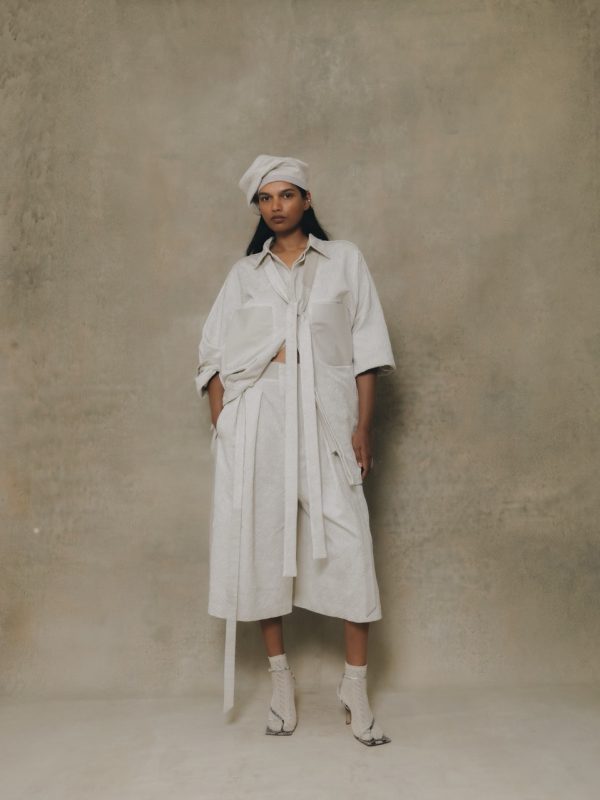
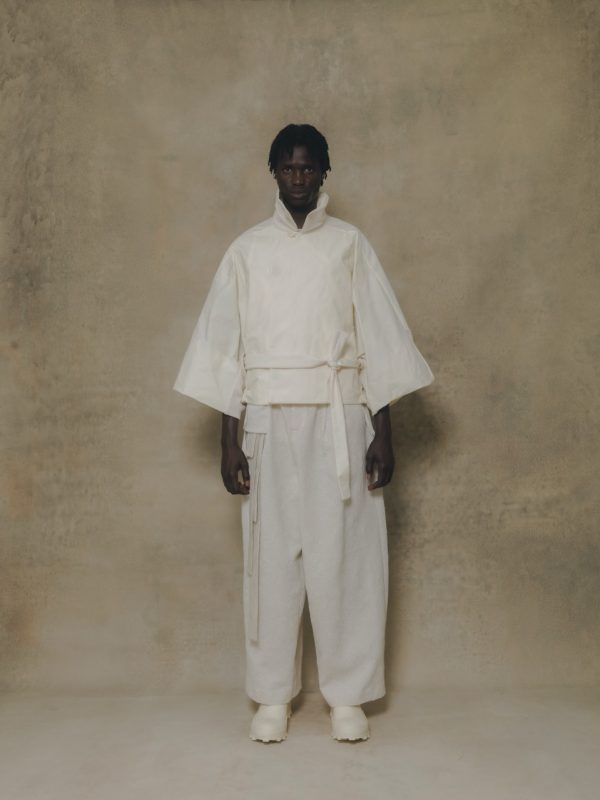
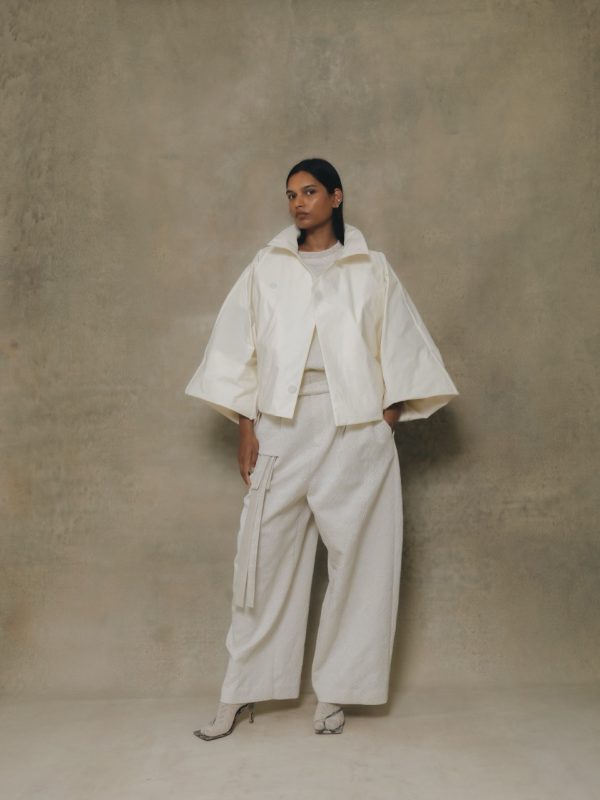
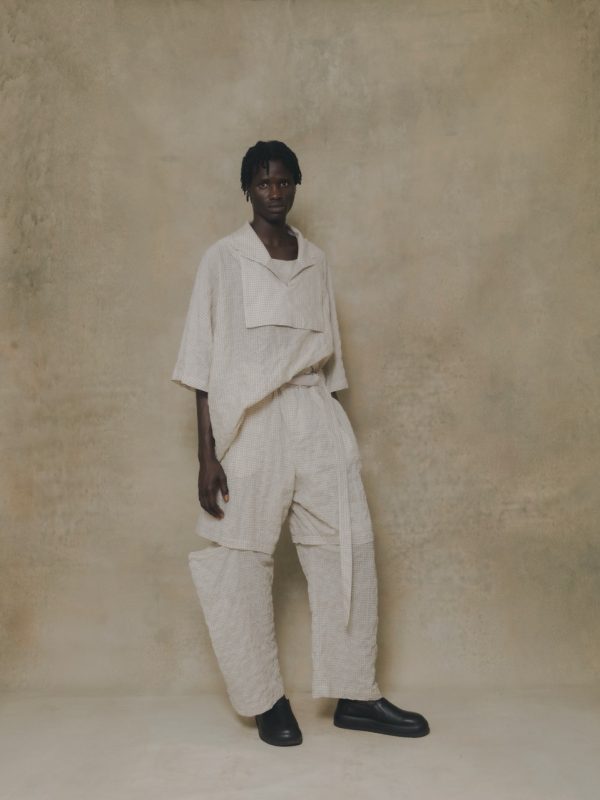
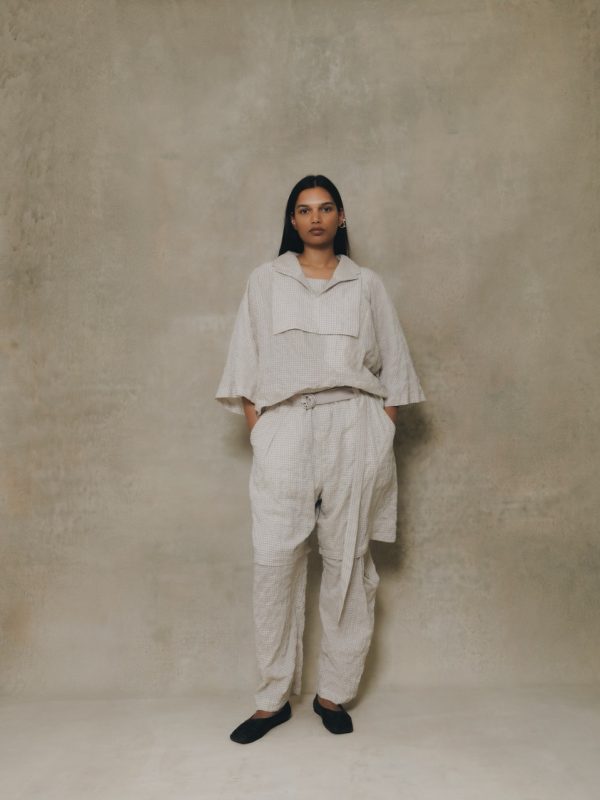
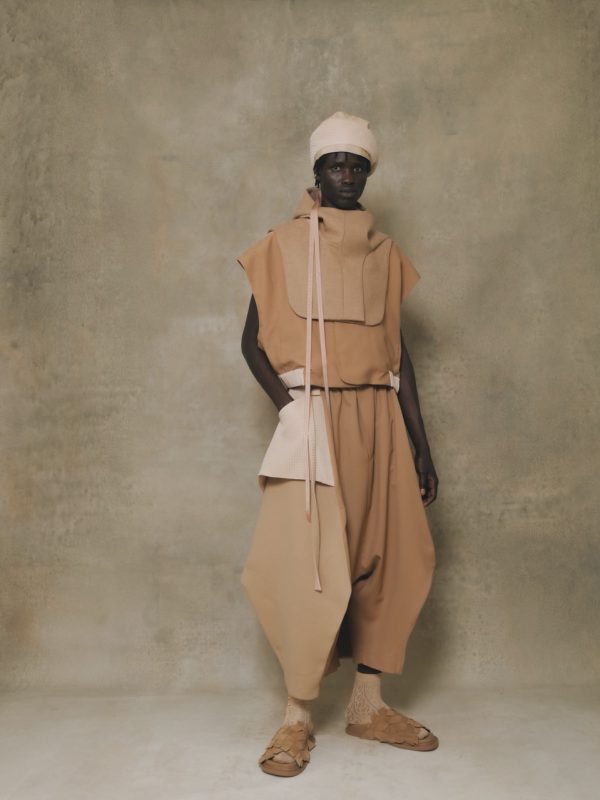
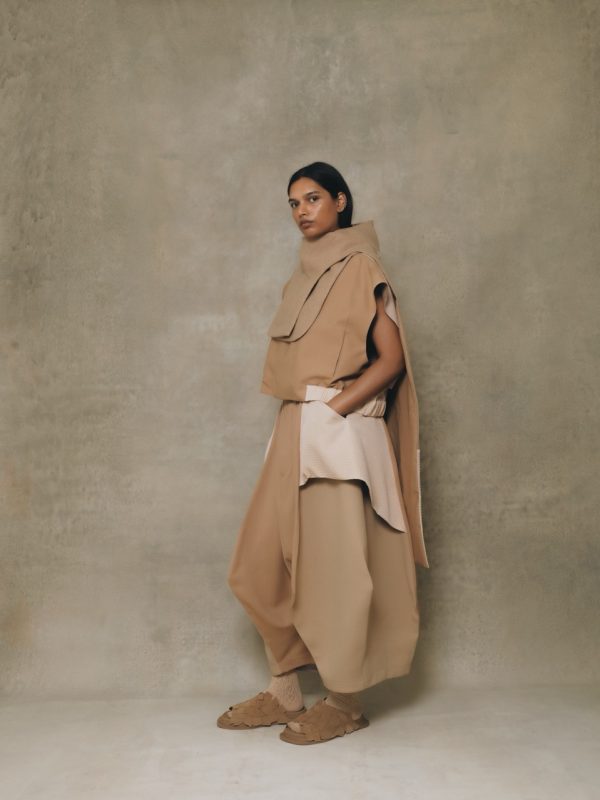
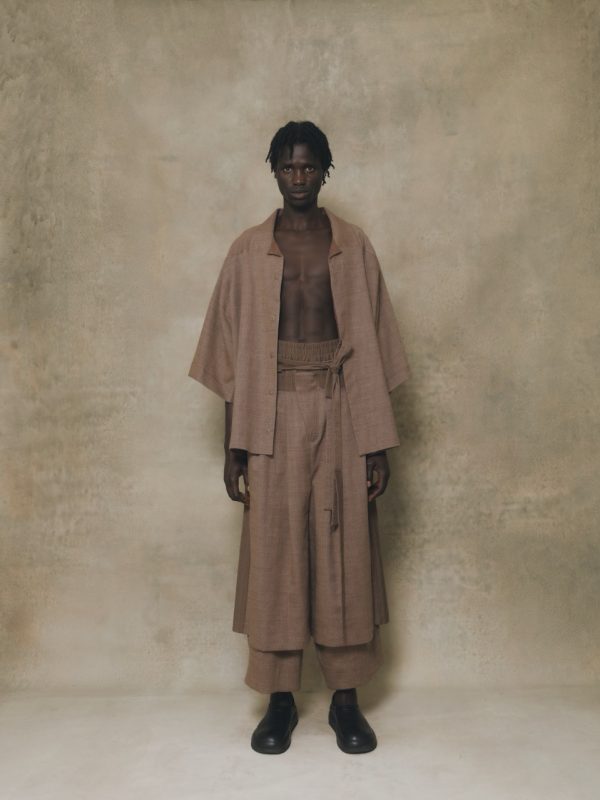
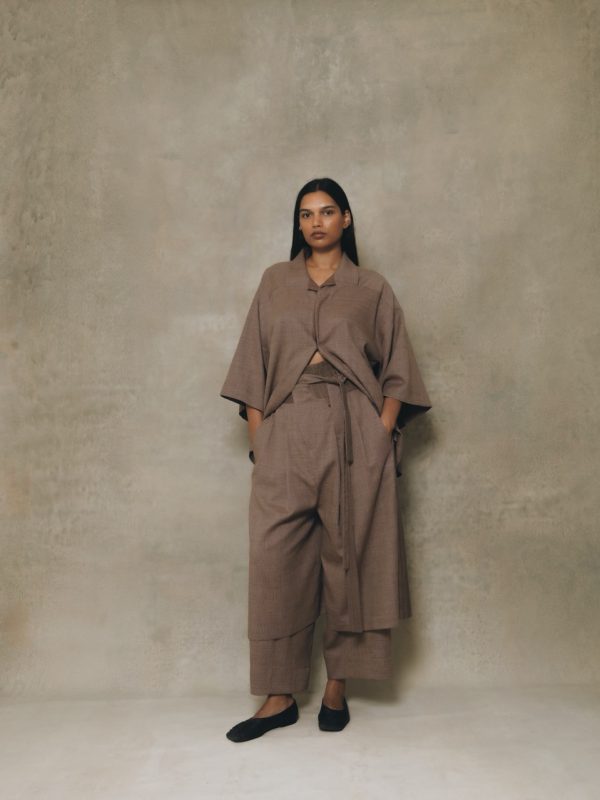
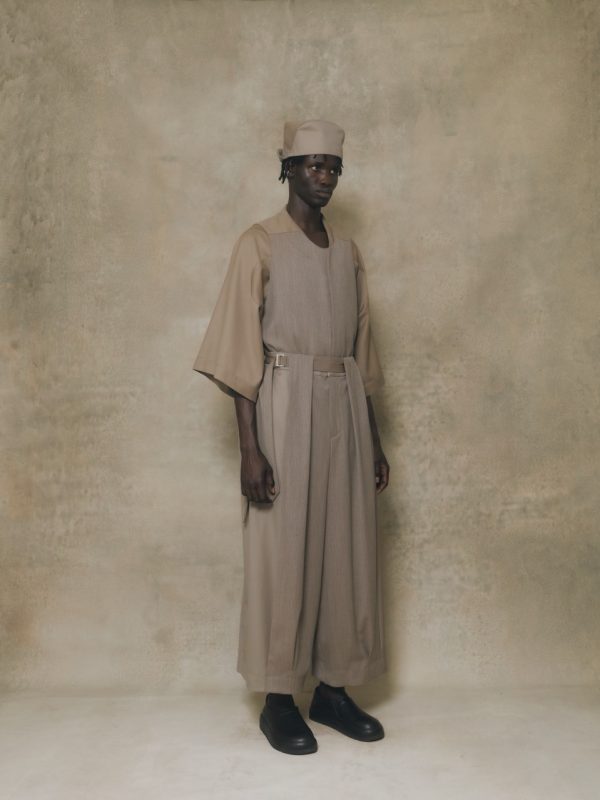
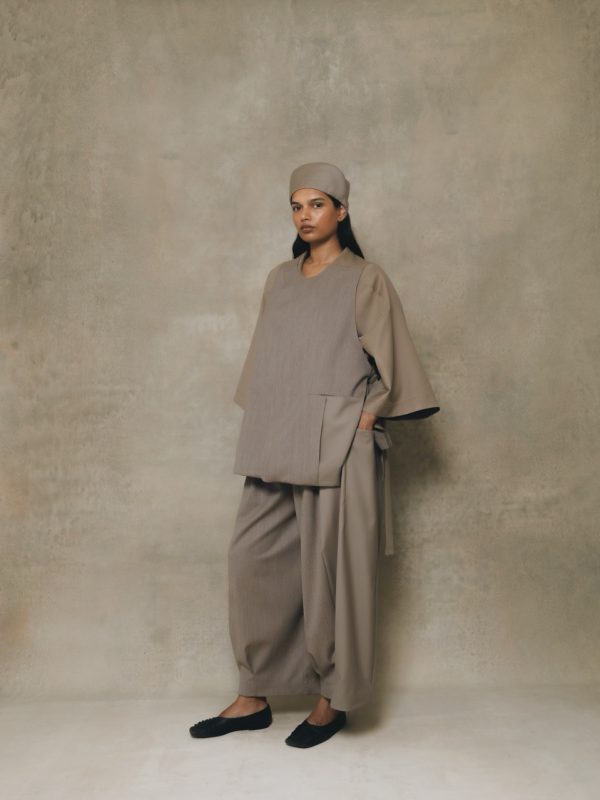
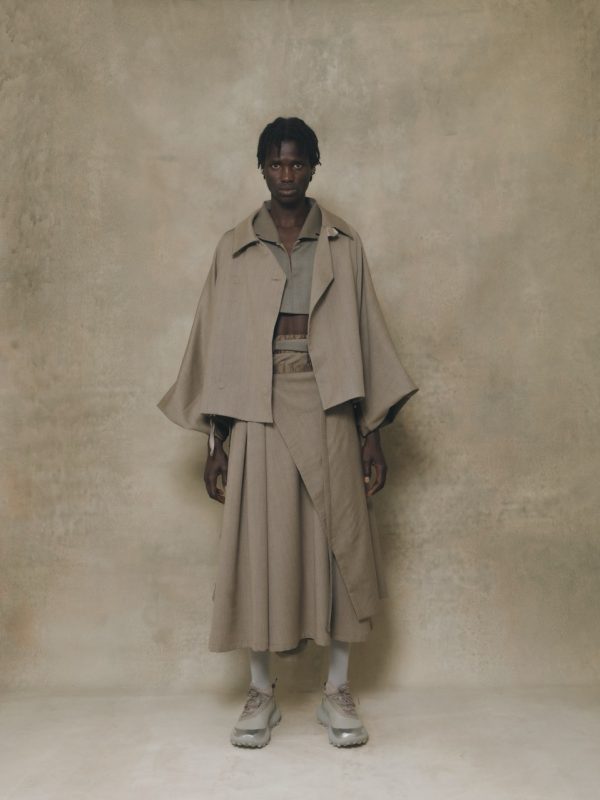
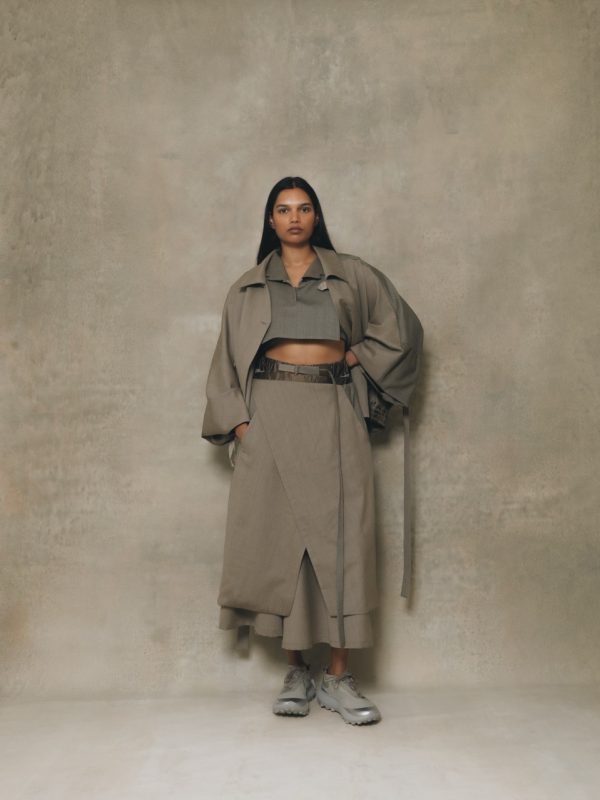
L’idée directrice tient en une phrase : chaque tenue fonctionne comme un dispositif que l’on assemble soi-même. Chemises, vestes, gilets et pantalons deviennent les rouages d’un même ensemble, pensés pour communiquer entre eux. On les superpose, on les serre, on les détache, et la silhouette bascule d’un registre à un autre selon la manipulation. Une veste se mue en couche de protection, un plastron se transforme en façade, une lanière resserre là où le corps le demande. Chacun compose sa tenue comme on ajuste un équipement avant de partir. Le geste stylistique s’inscrit dans une tendance déjà installée. Le tailleur flirte avec le vêtement de travail depuis plusieurs saisons, et l’esthétique fonctionnelle occupe désormais les vestiaires bien au-delà du techwear. Ce que LLOSA apporte, c’est la cohérence. Les grandes poches plaquées, les découpes en panneaux, les capuches, les boucles et les cordons de serrage appartiennent tous à un même système d’attaches et de réglages, conçu pour que chaque élément réponde aux autres.
In fashion, narrative usually serves as packaging. At LLOSA it reads more like a brief. For Spring/Summer 2027 the house follows a nomadic figure making its way across arid ground, somewhere off Earth, where the landscape thins into an expanse of stone with nothing to mark it. Appealing on paper, a premise like this could easily have stalled at the level of storytelling.
The governing idea fits into a single line: each look functions as an apparatus you put together yourself. Shirts, jackets, waistcoats and trousers become the working parts of one ensemble, conceived to speak to one another. You layer them, cinch them, unclip them, and the silhouette tips from one register into another according to how it is handled. A jacket turns into a layer of protection, a plastron into a façade, a strap draws things in where the body asks for it. Everyone composes a look the way you might adjust your kit before setting out. The gesture belongs to a tendency already well in place: tailoring has been flirting with workwear for several seasons now, and a functional aesthetic has settled into wardrobes far beyond techwear. What LLOSA adds is coherence. The oversized patch pockets, the panelled cuts, the hoods, buckles and drawcords all belong to a single vocabulary of fastenings and adjustments, built so that every element answers the rest.


La palette prolonge la même idée avec sobriété. Les tons chauds dominent, ocre, camel, sable, beige minéral, comme prélevés sur une terre sèche et exposée. Les gris virent au minéral, légèrement poussiéreux. Le blanc apparaît fatigué, comme frotté par le sable et la lumière. Le noir intervient avec parcimonie, pour trancher et donner de la tenue à certaines coupes. Ce choix chromatique raconte surtout une histoire d’usure. Les teintes semblent avoir déjà servi, patinées par le trajet supposé de celui qui les porte. C’est une manière élégante de privilégier une matière déjà vécue et de proposer des vêtements qui portent une histoire avant même d’être enfilés.
Reste l’image qui donne son titre à la collection. Dans le vocabulaire de la maison, le point d’eau au milieu du désert représente le moment où l’on défait, réajuste et réassemble sa tenue avant de reprendre la route. La métaphore résume assez bien le positionnement de LLOSA, à mi-chemin entre la précision du tailleur, la souplesse du sportswear et l’exigence du vêtement technique. On peut trouver le scénario un peu insistant. La mode aime ses caravanes et ses colonies imaginaires, et l’argument spatial vire parfois au gadget. LLOSA garde pourtant la construction au premier plan, la fable restant au service du vêtement. Derrière la lune et le désert, il y a des coutures qui tiennent, des couches qui s’emboîtent, une vraie réflexion sur la façon dont on s’habille quand la vie devient mobile, fragmentée, imprévisible.
The palette carries the same thought forward, quietly. Warm tones lead: ochre, camel, sand, a mineral beige, as though lifted straight from dry, exposed earth. The greys turn mineral too, faintly dusty. White looks worn, rubbed thin by sand and light. Black appears only sparingly, to cut across the rest and lend certain shapes their hold. More than anything, the colour tells a story of wear. The tones seem to have seen use already, weathered by the wearer’s imagined journey. It is an elegant way of favouring a material that has lived a little, of offering clothes that carry a history before they are ever put on.
That leaves the image that lends the collection its name. In the house’s own vocabulary, the watering hole in the middle of the desert stands for the moment you unfasten, readjust and reassemble your outfit before returning to the road. The metaphor captures LLOSA’s position well enough, poised between the precision of tailoring, the give of sportswear and the rigour of the technical garment. You could find the scenario a touch insistent. Fashion is fond of its caravans and its imaginary colonies, and the interplanetary conceit occasionally slips into gimmick. Yet LLOSA keeps construction to the fore, the fable staying in the service of the clothes. Behind the moon and the desert there are seams that hold, layers that slot together, a genuine reflection on how we dress when life turns mobile, fragmented, unpredictable.
You may also like
WALTER VAN BEIRENDONCK : SCARECROW
Chez Walter Van Beirendonck, la mode n’a jamais été un simple exercice de style. Elle est un lan

DOUBLET SS27
La mode connaît deux façons de parler du futur. La première hurle : textiles connectés, silhouet

KIDILL SS27
Le créateur japonais avait une patte reconnaissable en trois secondes. Il vient de la démonter. «
