
Sound of Cannes
Il existe à Cannes un prix que peu de festivaliers connaissent. Pas de tapis rouge, pas de flash. Juste des oreilles attentives, et la conviction que ce qu’on entend au cinéma mérite autant d’égards que ce qu’on voit.
Imaginez une salle de cinéma plongée dans le noir. L’image disparaît. Il ne reste que le son. Le vent dans les arbres, une porte qui grince, une respiration retenue, une mélodie qui surgit sans prévenir. Qu’est-ce qui reste du film ? Souvent, beaucoup plus qu’on ne le croit. C’est précisément ce pari-là que défend depuis 2017 le Prix de la Meilleure Création Sonore, remis chaque année dans la section Un Certain Regard du Festival de Cannes. Huit éditions, et toujours ce même geste fondateur : poser les yeux, ou plutôt les oreilles, sur ce que le cinéma fait entendre, sur cette façon qu’a le son de transformer un film en expérience physique. De faire qu’on frissonne, qu’on se tait, qu’on retient son souffle sans savoir exactement pourquoi.
Derrière ce prix, il y a un homme dont le métier est d’écouter le monde. Christian Hugonnet est acousticien et expert judiciaire. Il passe ses journées à mesurer, à analyser, à comprendre comment le son se comporte dans les espaces. Mais il y a longtemps qu’il a compris que la question du sonore dépassait les salles de concert et les studios d’enregistrement. En 1998, il fonde La Semaine du Son, une organisation dont l’ambition est de réconcilier chaque être humain avec ce sens trop souvent maltraité ou ignoré. Santé auditive, pédagogie, environnement sonore, relation entre l’image et le son : les chantiers sont vastes. En 2017, l’UNESCO reconnaît officiellement cette démarche. La même année, Hugonnet convainc deux personnalités de l’univers culturel français de porter avec lui un nouveau projet cannois. Janine Langlois-Glandier, qui a traversé l’histoire de l’audiovisuel français de France 3 à Arte en passant par l’INA, et Costa-Gavras, dont les films ont toujours su que la bande-son d’une époque était aussi politique que ses images. Ensemble, avec l’accord de Thierry Frémaux, ils lancent le prix lors du 70e Festival de Cannes.
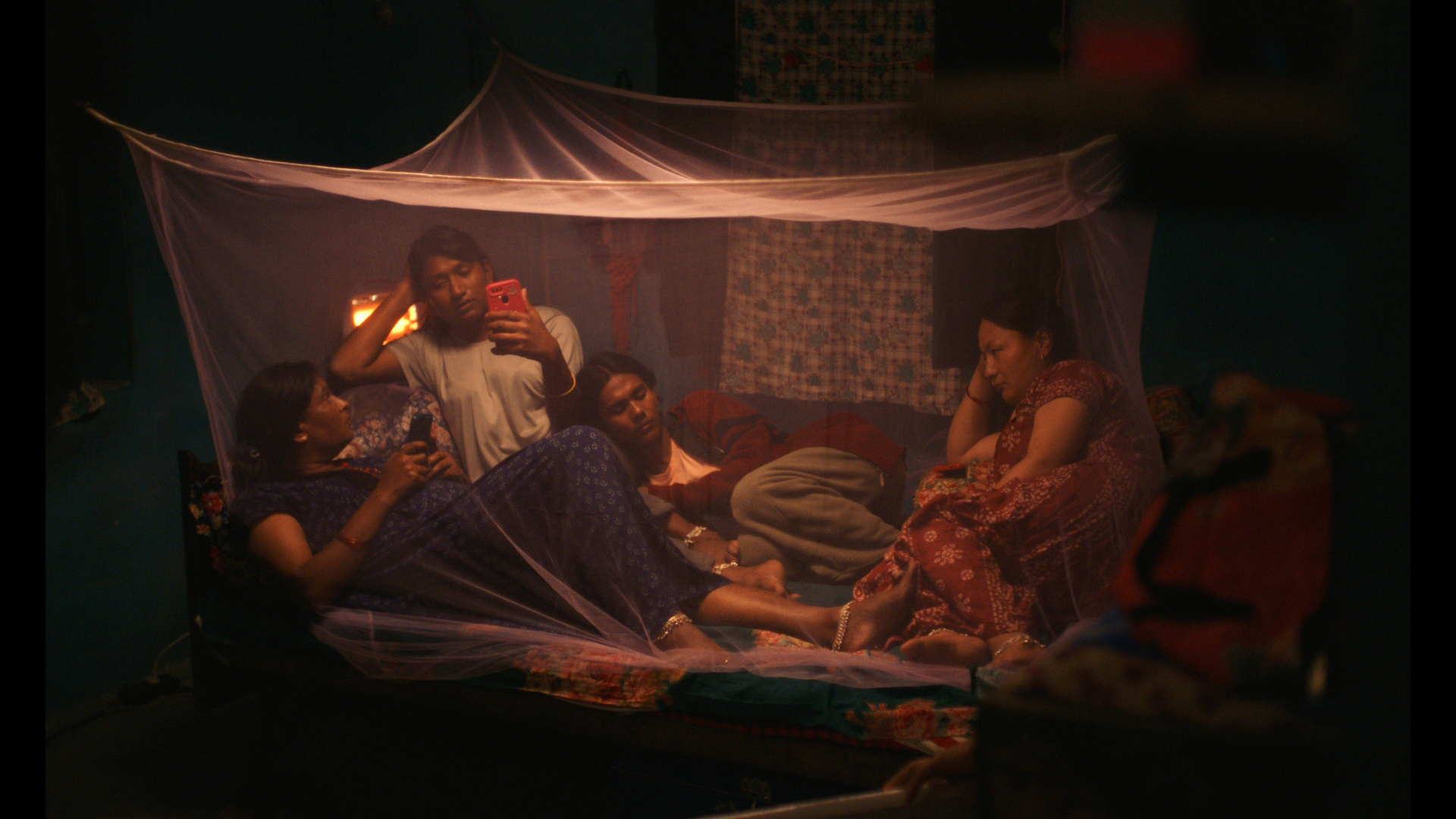
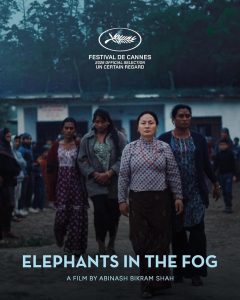
Depuis, neuf réalisateurs venus des quatre coins du monde ont reçu la distinction. Une Tunisienne, un Danois, un Espagnol, une Mexicaine, une Autrichienne, un Norvégien, un Américain. Et cette année, pour la huitième édition, un Népalais. Chaque palmarès ressemble à une invitation au voyage, pas seulement géographique mais sensoriel. Chaque film primé a su faire du son autre chose qu’un habillage : une pensée, une dramaturgie, une présence. Cette année, le jury a choisi à l’unanimité de récompenser Abinash Bikram Shah pour Elephants in the Fog, son premier long-métrage. Le film a été tourné dans les plaines du Teraï, au sud du Népal, dans une région où la jungle côtoie les villages, où les éléphants sauvages rôdent la nuit près des habitations. Il raconte la vie d’une communauté Kinnar, ces femmes transgenres que la société népalaise maintient à ses marges. La cheffe de cette communauté cherche à fuir, à aimer, à vivre. Puis une de ses filles disparaît. Dans ce film, la nature elle-même devient personnage. Les sons du dehors s’infiltrent dans le dedans des vies. La forêt respire, menace, protège. Le son n’illustre pas le récit, il le double, l’amplifie, parfois le contredit. C’est exactement ce que ce prix cherche à saluer. Abinash Bikram Shah repartira de Cannes avec deux trophées : outre le Prix de la Meilleure Création Sonore, le film a également décroché le Prix du jury de la section Un Certain Regard, faisant d’Elephants in the Fog le premier film népalais de l’histoire à être récompensé sur la Croisette. Dans son discours, le réalisateur a parlé de visibilité, de marges ramenées vers la lumière. Des mots qui auraient pu tout aussi bien s’appliquer au prix qu’il recevait le matin même.
Le jury de cette édition était présidé par Vincent Maël Cardona, cinéaste dont le rapport au son est intime et revendiqué. Son premier film, Les Magnétiques, se déroulait dans l’univers des radios libres des années 1980 et traitait le son comme une matière vivante, presque amoureuse. Autour de lui, des personnalités aux sensibilités complémentaires : une artiste qui a fait de sa voix un instrument de résilience, un chef d’orchestre dont le travail consiste à équilibrer les timbres et les silences, un ingénieur du son qui a passé sa carrière à saisir la vie dans un micro, et les deux fondateurs du prix, porteurs d’une mémoire et d’une exigence accumulées au fil des éditions. Ce jury-là s’est réuni pour répondre à une question simple et vertigineuse : dans quel film, cette année, le son a-t-il fait quelque chose qu’aucune image seule n’aurait pu accomplir ?
Le Prix de la Meilleure Création Sonore reste méconnu du grand public. Il ne bénéficie pas des projecteurs qui inondent les marches du Palais. Mais il incarne peut-être mieux que d’autres une certaine idée du cinéma : celle d’un art total, où rien n’est accessoire, où le moindre bruitage, le moindre silence, la moindre note de musique participe à ce que le film fait à celui qui le regarde.
There is a prize at Cannes that few festivalgoers know about. No red carpet, no flashbulbs. Only attentive ears, and the conviction that what one hears at the cinema deserves as much consideration as what one sees.
Picture a cinema plunged into darkness. The image fades. Only sound remains. Wind in the trees, a door creaking on its hinges, a held breath, a melody arriving without warning. What stays with us from a film? Often, far more than we imagine. That is precisely the wager the Prix de la Meilleure Création Sonore has been making since 2017, awarded each year within the Un Certain Regard section of the Festival de Cannes. Eight editions, and always the same founding gesture: turning one’s eyes, or rather one’s ears, towards what cinema causes us to hear, towards that particular capacity of sound to transform a film into a physical experience. To make us shiver, fall silent, hold our breath, without quite knowing why.
Behind this prize stands a man whose profession is to listen to the world. Christian Hugonnet is an acoustician and forensic expert. He spends his days measuring, analysing, understanding how sound behaves within spaces. But he understood long ago that the question of the sonic reached far beyond concert halls and recording studios. In 1998 he founded La Semaine du Son, an organisation whose ambition is to reconcile every human being with a sense too often mistreated or ignored. Auditory health, pedagogy, the sonic environment, the relationship between image and sound: the territory is vast. In 2017, UNESCO officially recognised this work. That same year, Hugonnet persuaded two figures from French cultural life to join him in carrying a new Cannes project forward. Janine Langlois-Glandier, who had traversed the history of French broadcasting from France 3 to Arte by way of the INA, and Costa-Gavras, whose films have always understood that the soundtrack of an era is as political as its images. Together, with the agreement of Thierry Frémaux, they launched the prize at the 70th Festival de Cannes.
Since then, nine filmmakers from across the world have received the distinction. A Tunisian, a Dane, a Spaniard, a Mexican, an Austrian, a Norwegian, an American. And this year, for the eighth edition, a Nepali. Each laureate reads like an invitation to travel, not only geographically but sensorially. Each awarded film has known how to make sound into something other than a veneer: a way of thinking, a dramaturgy, a presence. This year, the jury unanimously chose to honour Abinash Bikram Shah for Elephants in the Fog, his debut feature. The film was shot in the Terai plains of southern Nepal, a region where jungle and village exist in close proximity, where wild elephants move through the night near human settlements. It tells the story of a Kinnar community, transgender women kept at the margins of Nepali society. The head of this community seeks escape, love, a life. Then one of her daughters disappears. In this film, nature itself becomes a character. The sounds of the outside seep into the interior of lives. The forest breathes, threatens, protects. Sound does not illustrate the narrative so much as double it, amplify it, at times contradict it. That is precisely what this prize sets out to honour. Abinash Bikram Shah left Cannes with two awards: alongside the Prix de la Meilleure Création Sonore, the film also received the Jury Prize of the Un Certain Regard section, making Elephants in the Fog the first Nepali film in history to be recognised on the Croisette. In his speech, the director spoke of visibility, of margins drawn back towards the light. Words that could just as well have applied to the prize he had received that same morning.
This edition’s jury was presided over by Vincent Maël Cardona, a filmmaker whose relationship to sound is both intimate and avowed. His debut feature, Les Magnétiques, unfolded within the world of pirate radio in the 1980s and treated sound as a living material, almost amorous in its charge. Around him, personalities of complementary sensibilities: an artist who has made of her voice an instrument of resilience, a conductor whose work consists in balancing timbres and silences, a sound engineer who has spent a career capturing life within a microphone, and the two founders of the prize, carrying a memory and an accumulated rigour through each successive edition. This jury gathered to answer a question at once simple and vertiginous: in which film, this year, did sound accomplish something no image alone could have achieved?
The Prix de la Meilleure Création Sonore remains little known to the wider public. It does not benefit from the floodlights that drench the steps of the Palais. And yet it may embody, better than most, a certain idea of cinema: that of a total art, in which nothing is incidental, in which the smallest sound effect, the smallest silence, the smallest musical phrase participates in what the film does to the person watching it.
Elephants in the Fog
By Abinash Bikram Shah
With Pushpa Thing Lama, Deepika Yadav, Jasmin Bishwokarma
You may also like
SIR DANIEL K. WINN
Sir Daniel K. Winn (peintre, chevalier, philanthrope) n’était pas prêt. Les réalisateurs so